Casey Lynch’s lecture explores AI as a relational and spatial practice, offering a critical revision of dominant narratives about technology and autonomy.
Casey Lynch’s lecture explores AI as a relational and spatial practice, offering a critical revision of dominant narratives about technology and autonomy.
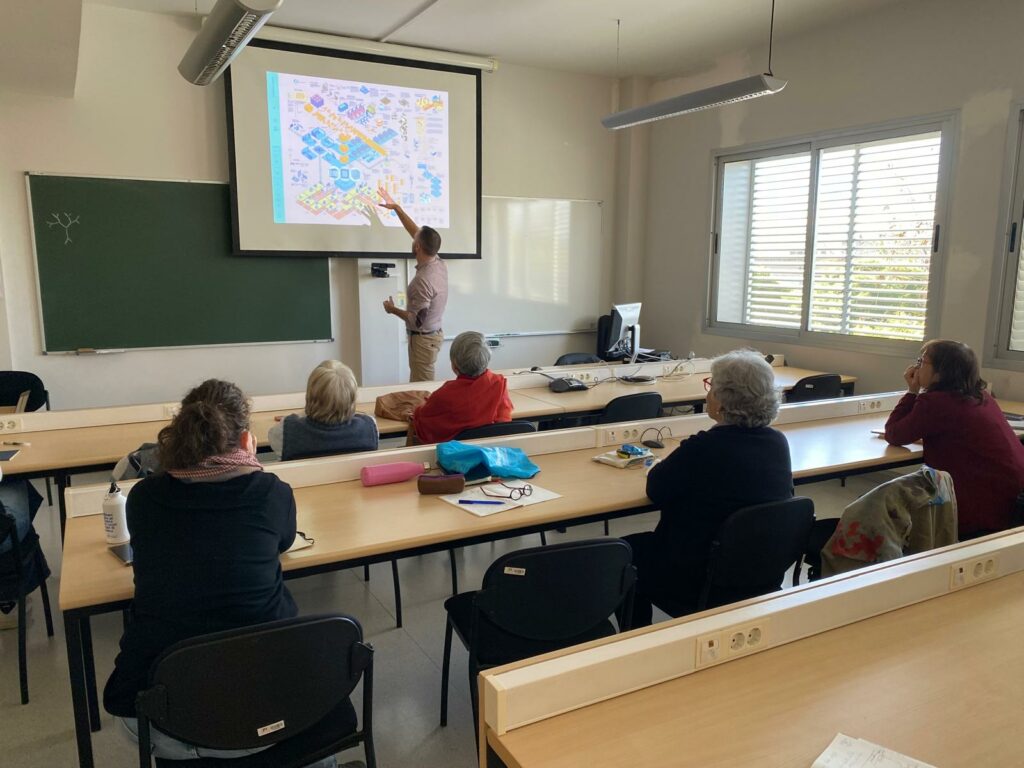
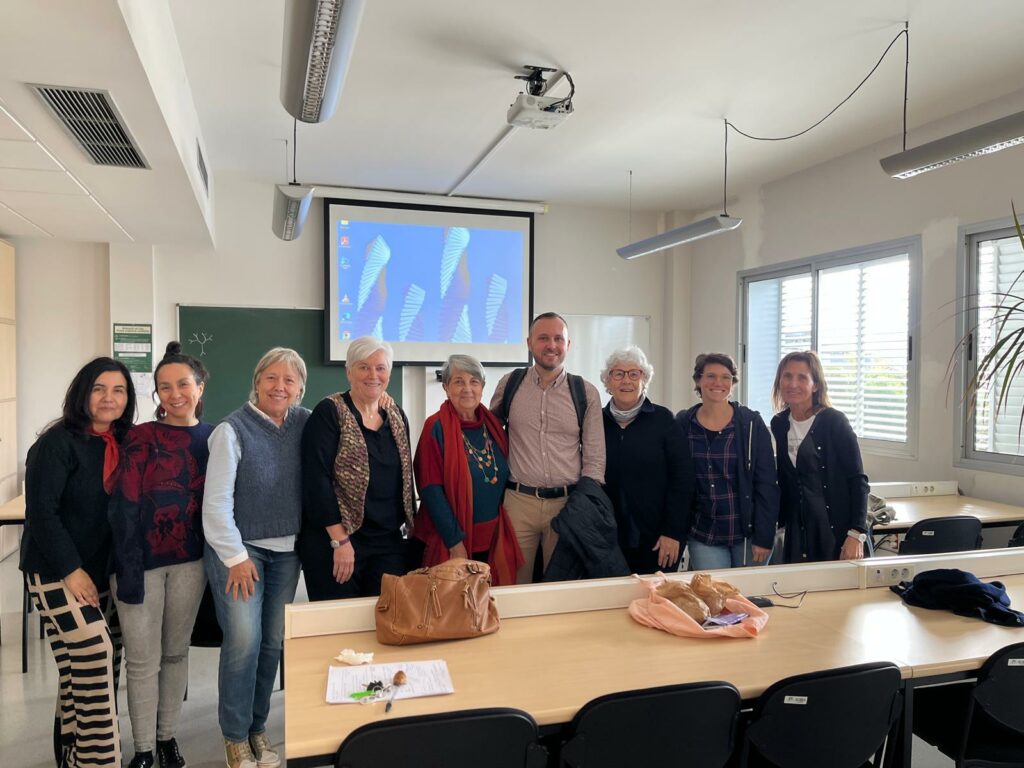
On Friday, 7 November 2025, the first seminar of the academic year took place, organised by the Gender and Geography Research Group. The session featured Casey Lynch, Ramón y Cajal Research Fellow in the Department of Geography at the University of Girona.
Under the title “Feminist Geographies of AI”, Lynch delivered a lecture that challenged dominant discourses on artificial intelligence (AI), often presented as the quintessential disruptive technology. The speaker critically analyzed the idea that digital systems are gaining increasing autonomy that could displace humans from decision-making spaces, highlighting the conceptual limitations underlying this narrative.
Drawing on a theoretical framework informed by feminist geographies and feminist technoscience, Lynch proposed understanding AI not as an object or artificial subject, but as a relational and spatial practice. This approach broadens the range of places, actors and questions considered relevant within more conventional analyses.
During the session, Lynch highlighted three key axes of his research:
- the conceptualisation of “intelligence” in hegemonic AI discourses,
- the gendered and racialised design of interactive agents,
- and the ways these agents become integrated into everyday spaces and rhythms.
The seminar opened the 2025–2026 activity cycle of the Gender and Geography Research Group, providing an enriching space for debate on the critical challenges and possibilities of approaching AI from a feminist perspective.