Focus group: Preservice teachers
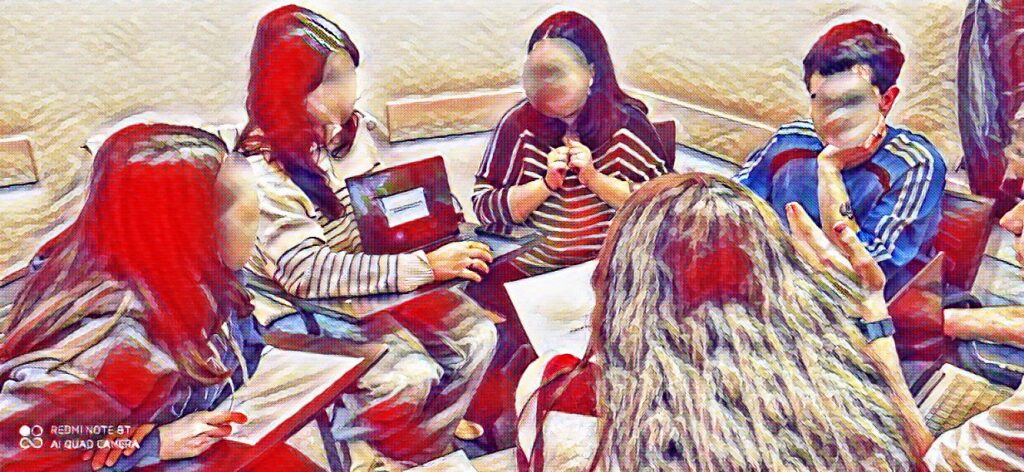
Dec 2025: Focus group discussions with the first cohort of 25 participants explored attitudes and perspectives on the use of VR and AI in language teaching and learning; comparative data from an international cohort in France will be collected in early 2026.
Presentation to Preservice Teachers
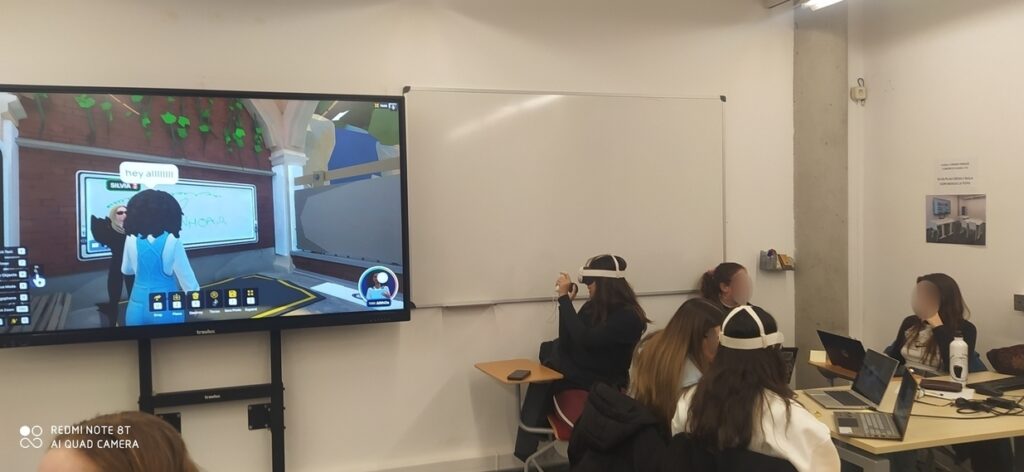
Oct 2025: The VR lesson plans are presented to a group of preservice teachers for piloting and structured feedback. Their input informed refinements to the design. One preservice teacher from this group was subsequently recruited to participate in the data collection phase.
Data collection
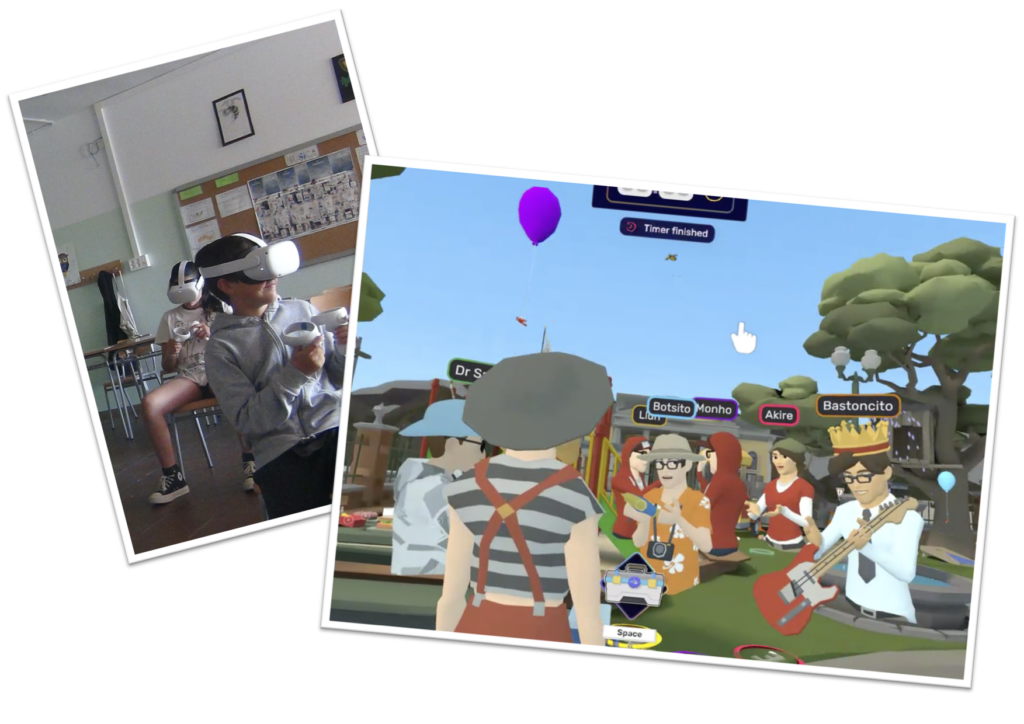
Apr-May 2025: Data were collected across eight sessions over approximately three months through collaboration among the teacher, researcher, a preservice teacher, and international partners at the University of Illinois Urbana–Champaign, including in-world VR recordings, external video, focus groups, station activities, and student output.
Revision of planning
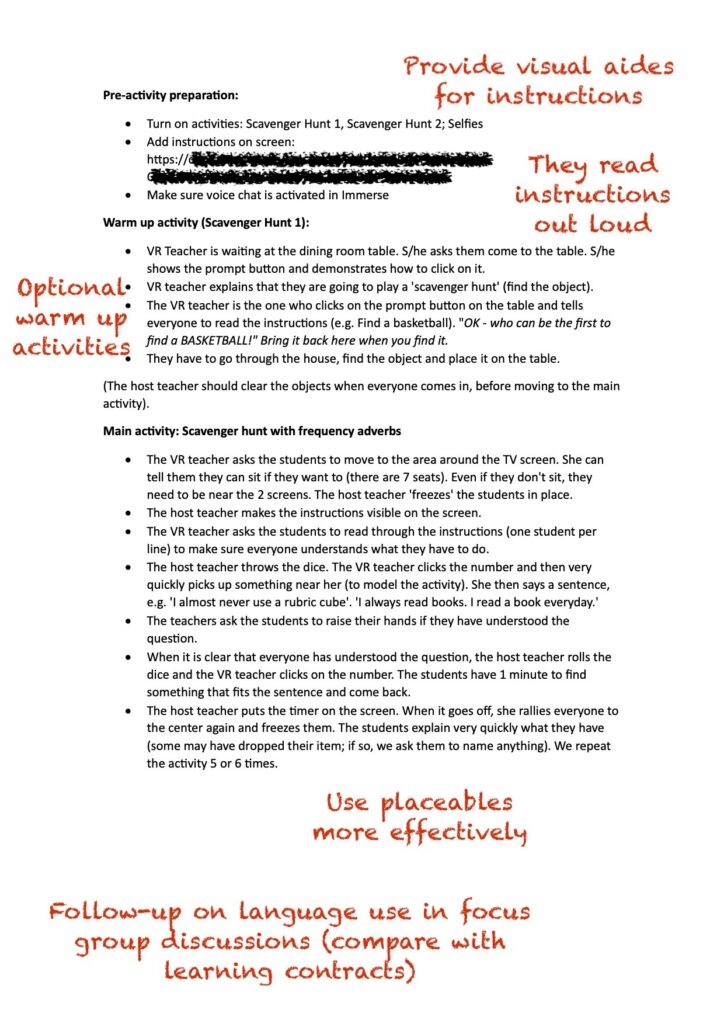
March 2025: Regular meetings between the teacher, researchers, and preservice teacher supported a collaborative research design process, focusing on detailed planning, identifying needed corrections, and strengthening successful elements, with iterative refinements made based on shared reflection and joint decision-making.
Planning
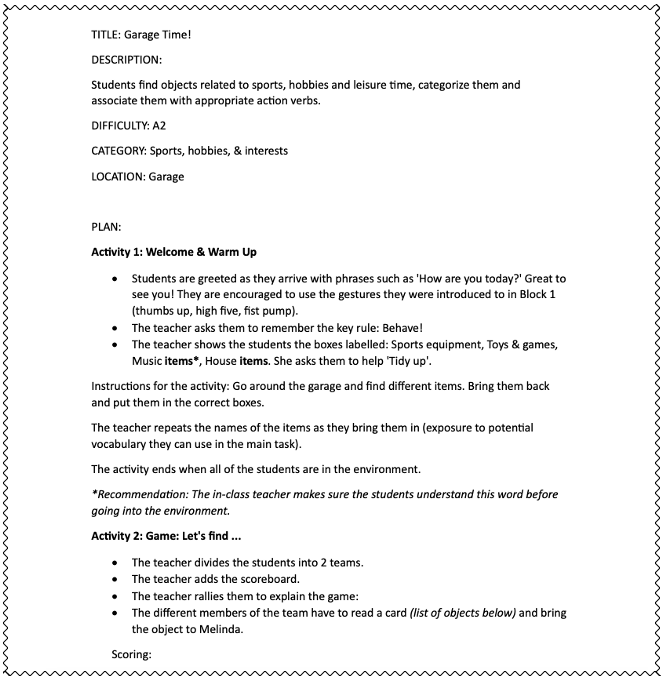
Jan-Mar 2025: Over several months, the teacher, the research team, and our collaborators in the USA met regularly to design and refine the VR learning activities. These working sessions combined pedagogical planning, technical exploration, and curriculum alignment. Together, we reviewed learning goals, discussed classroom realities, tested tools, and adjusted ideas to ensure that the virtual reality tasks would be both meaningful for students and feasible for teachers to implement. By bringing together classroom experience, research perspectives, and technical expertise, the team was able to co-construct VR activities that are pedagogically grounded, collaborative in nature, and closely tied to the project’s learning objectives.
School Visits
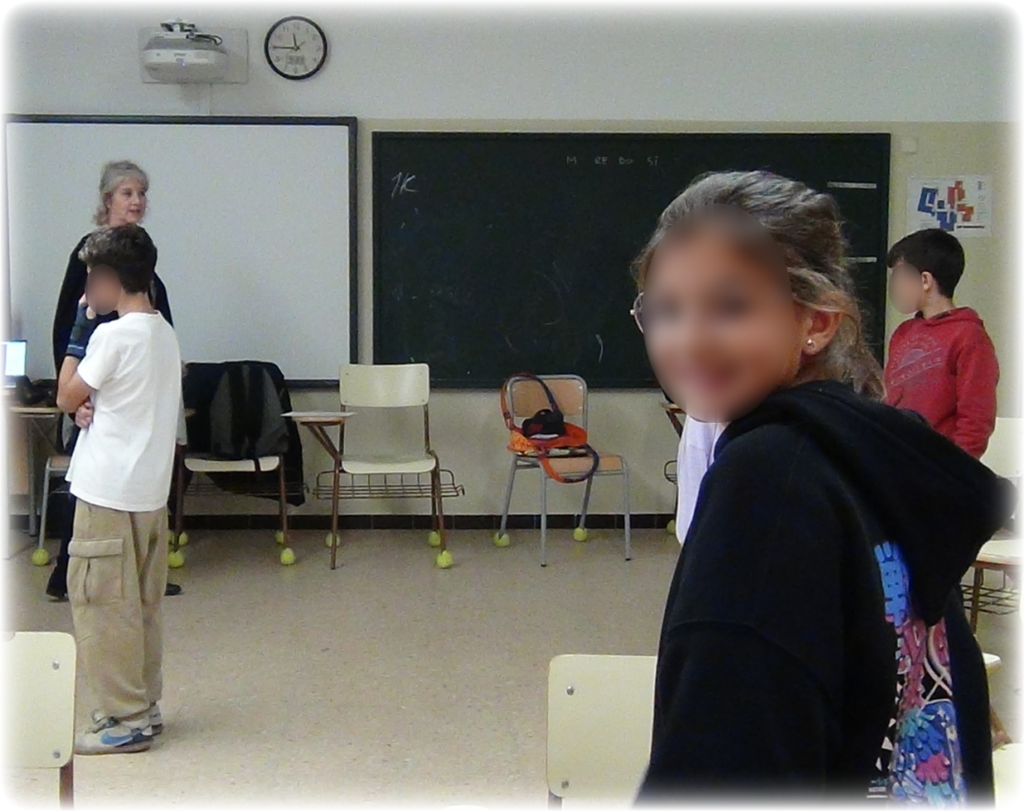
Jan-Feb 2025: Visits to the school to meet with administrators and teachers and to observe classroom practices in context. This initial field visit was essential for building relationships, understanding the institutional environment, and gaining a clearer sense of everyday teaching and learning realities. It helped ground the research in real conditions, supported more informed data collection, and ensured that project decisions are responsive to local needs and practices.
