Our group maintains an extensive network of international collaborations with leading research teams in neuroscience and biomedicine. These partnerships allow us to integrate advanced methodologies in epigenomics, molecular neurobiology, and behavioural analysis, strengthening the translational dimension of our projects.
Within the current EPISCHIZORAT project, our main collaborations include:
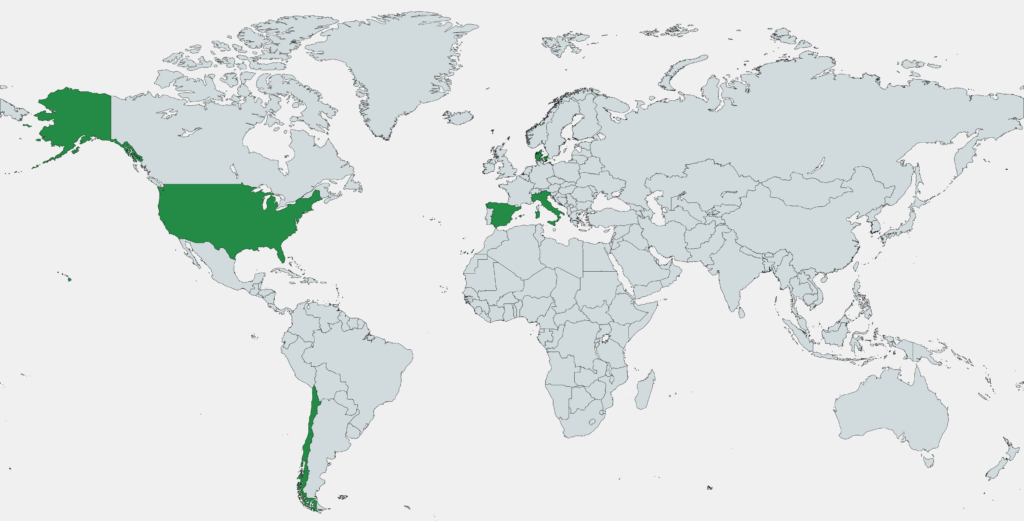
Denmark – Dr Susana Aznar (Bispebjerg-Frederiksberg Hospital, København)
Dr Susana Aznar and her team collaborate with our group on studying gene expression differences related to neuroplasticity and synaptic function in animal models of vulnerability to schizophrenia.
Her laboratory contributes to gene expression analyses and validation of epigenetic results, advancing our understanding of the molecular mechanisms that link early-life environmental experiences with neuronal activity and mental health.
Spain – National collaborators
Our group maintains a broad network of collaborations across Spain with research teams from various universities and institutions, particularly in the fields of neurobiology, behavioural genetics, and translational mental health research.
Within the current project, we collaborate closely with the National Centre for Genomic Analysis (CNAG, Barcelona), led by Dr Simon Heath, who heads the genome-wide epigenomic and bioinformatic analyses. His team is responsible for processing and interpreting DNA methylation data, providing a solid basis for understanding how positive or adverse early-life experiences shape gene expression and neural function.
In addition, collaborators such as Dr Carmen Torres, Dr Ignacio Morón, Dr Pilar Torres, and Dr Margalida Coll provide technical and methodological support for experimental coordination and quality assurance across research processes developed at the UAB and in collaboration with other national institutions.
United States of America – Dr Javier González-Maeso (Virginia Commonwealth University, Richmond)
Dr Javier González-Maeso collaborates with our group in the study of neuropharmacological mechanisms involving 5-HT2A and mGluR2 receptors, which play a key role in neuronal signalling processes associated with schizophrenia.
This collaboration has led to the identification of relevant molecular and epigenetic alterations, strengthening the translational bridge between basic research using animal models and the clinical understanding of mental disorders.
Italy – Prof. Osvaldo Giorgi and Prof. Marina Quartu (Università degli Studi di Cagliari, Cagliari)
The Cagliari group, together with Dr Mari G. Corda, Prof. Fabrizio Sanna, and Dr Maria P. Serra, has been part of a long-standing collaboration of over two decades, actively contributing to molecular and behavioural studies using the Roman rat strains.
Under the direction of Professors Giorgi, Quartu, and Corda, the Italian team analyses the expression of key proteins such as BDNF, TrkB, and PSA-NCAM, which are involved in neuroplasticity and cortical maturation.
This long-term alliance has been essential to unravel the synaptic and molecular foundations of schizophrenia-related phenotypes and to consolidate the scientific partnership between Cagliari and Barcelona.
Republic of Chile – Dr Cristóbal del Río-Álamos (Universidad Austral de Chile, Valdivia)
Dr Cristóbal del Río-Álamos, a former member of our group and currently Associate Professor in Chile, collaborates on the behavioural and morphological analysis of early-life experience effects on the brain and behaviour.
His work focuses on methodological transfer and the adaptation of experimental protocols to new research contexts, contributing to expanding the international dimension of the project and consolidating our group’s scientific presence in Latin America.