Some topics developed at SiMMaS
Windmill-like concentrators
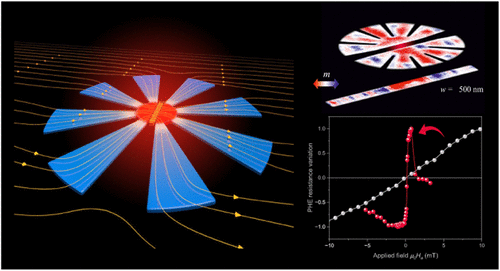
We have investigated how a thin windmill-like ferromagnetic system can hugely concentrate a magnetic field at its core. We have described the different effects that provide this enhancement: the thickness of the device and its unique windmill-like geometry. The idea is to use the central part of the windmill as a sensor that would enhance its sensitivity by a large factor due to the presence of the blades. Factors up to 150 times stronger than the applied field can be achieved.
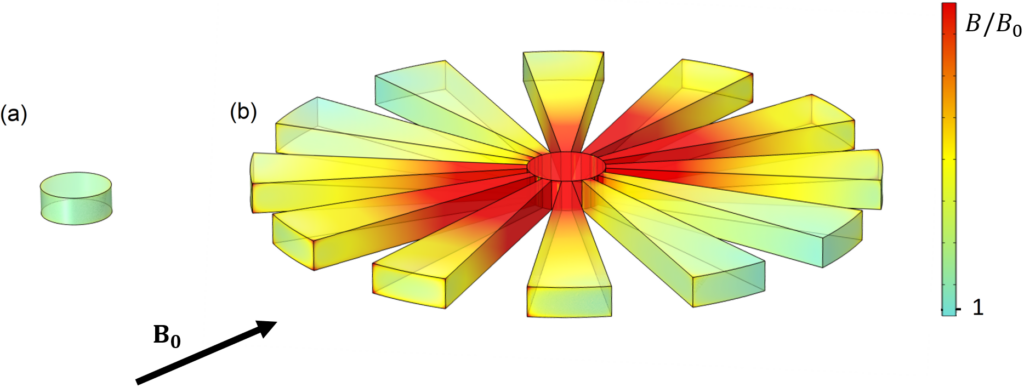
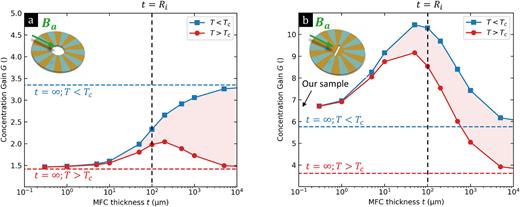
These windmill-like concentrators have also been studied in the dimensional transition from 3D to 2D. Their properties have been analysed in detail, both theoretically and experimentally. This is a collaborative work together with ICMAB-CSIC in Barcelona, Université de Liège (Belgium), University of Bath (UK), and CEITEC of Brno University of Technology (Czech Republic) in the context of the METAMAGIC project.
More Information:
Transformation of magnetic fields
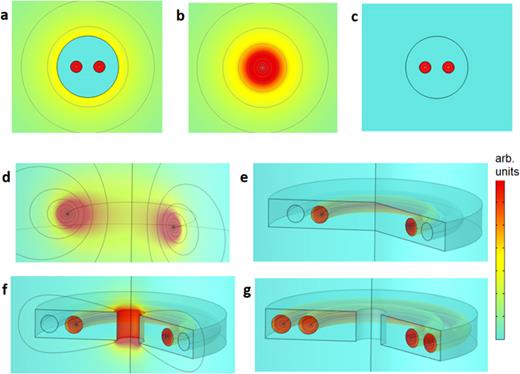
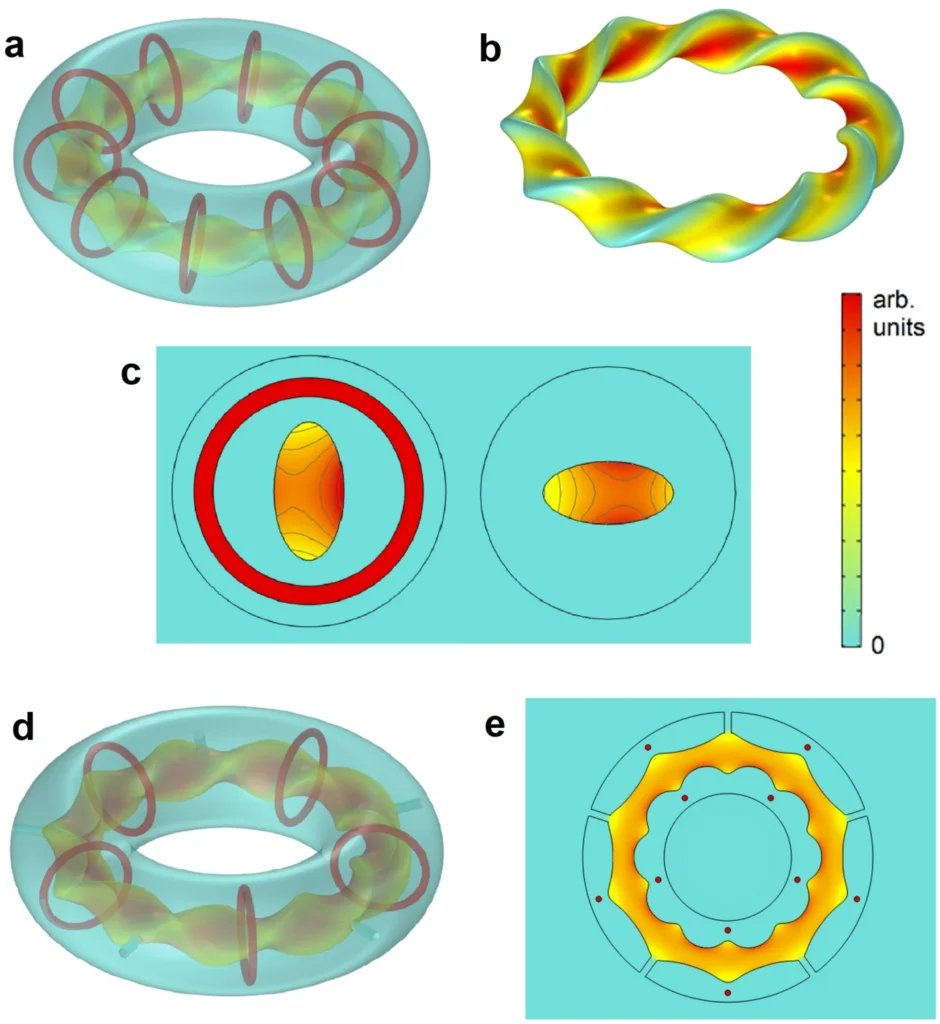
We are interested in different ways of «controlling» static magnetic fields. That is, using different types of materials (i. e ferromagnets and/or superconductors) that can shape the field lines of a given source, we are studying how to manipulate these fields to cloak, transform, and, in general, mould them in a desired fashion.