Find out about the related research being carried out by the members of this team!
GASPOF – Pervasive gas sensing using optical fibers, as part of the communication network of the future.
Using fiber sensor networks, distributed information can be gathered even from places that are difficult or even impossible to be reached by other means. However, so far, such distributed fiber sensing networks are not capable of providing access to distributed chemical information along the fiber. In particular, highly selective and sensitive information on the concentration of various gases along the fibre cannot be obtained on a routine basis despite being desirable and needed in many different application scenarios. It is therefore tempting to explore the potential of integrating innovative optical gas sensing nodes along optical fibers, towards their massive deployment in existing telecom infrastructures. New developments in optical gas spectroscopy have opened up new prospects for remote gas sensing applications, addressing the limitations of current analytical methods in terms of sensitivity, ease-of-use and miniaturization.
Nevertheless, there are important challenges to overcome before such a joint use of the fibers network for both communication and gas sensing becomes possible. GASPOF addresses these challenges, contributing to the development of the optical infrastructure of the future, where the communications network also acts as a large-scale distributed multi-parameter sensor. Focus will be put on two different optical techniques for gas sensing using the fiber-optics network: laser-based PTS and LHR. Both techniques will be advanced and integrated with the existing optical fibers network infrastructure. In parallel, we will investigate the possibility of using coherent OTDR for distributed gas sensing, while a reduced-cost approach for acoustic sensing will also be designed for measuring physical parameters of interest (e.g. vibrations) in addition to gas sensing. The GASPOF system configurations will demonstrate their performance and capabilities in important 4 application use cases.
At ICTA-UAB we are contributing to the
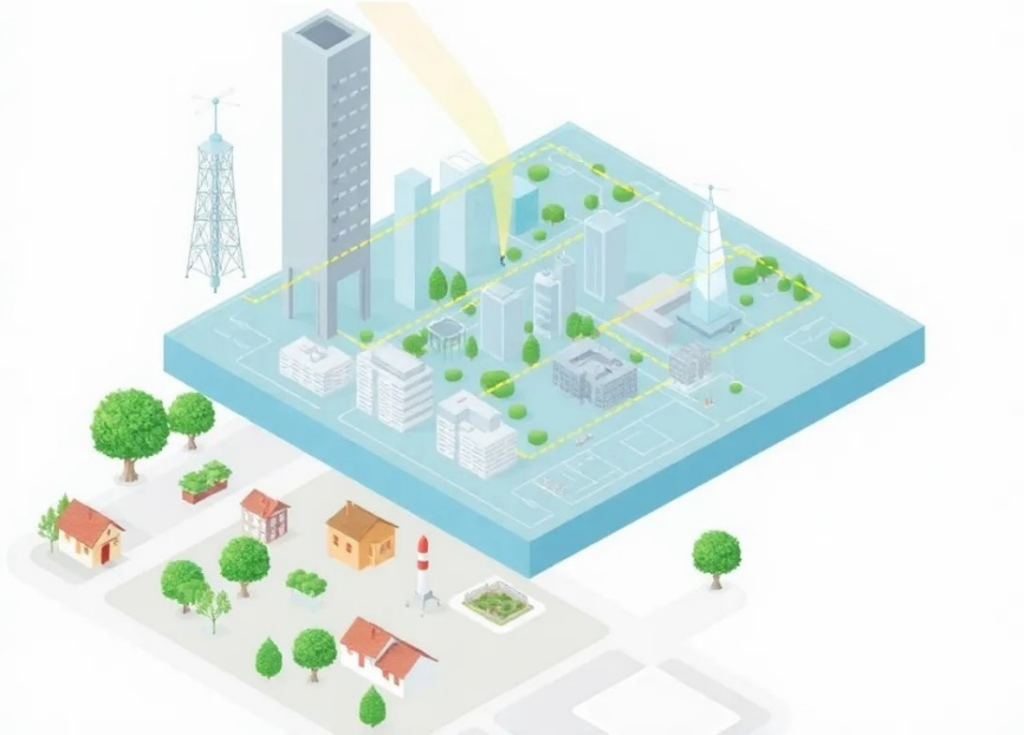
Use case #1: Greenhouse gases (GHG) monitoring:
1) Society relevance/goals:
– Cities emit 70% of global GHG (industry and transport) validate inventories, assess decarbonization progress, input for climatic models, GHG sources and sinks
2) Current technology / Challenges:
– Satellite, surface and atmospheric column measurements
– Reduced cost densification of measurements networks
3) GASPOF approach: PTS and LHR system
Use case:
Barcelona:
– URBAG: 5 stations for continuous surface GHG measurements (CO2, CH4)
– COCCON Spain: 4 stations for continuous columns measurements (CO2, CO, CH4…)
Athens or Thessaloniki:
– LANCOM fiber network
URBAG – Integrated Systems Analysis of Urban Vegetation and Agriculture

Funded by the Horizon 2020 European Research Council and hosted by ICTA-UAB (2019-2025).
Urban and peri-urban agriculture is currently experiencing rapid growth. This covers a variety of forms, such as vertical farming, greenhouse rooftops, local foodsheds, which together with green spaces like parks and green roofs, are referred to as green infrastructure. It potentially makes cities more resilient to climate change and more sustainable in terms of water management, food production, air quality, human well-being and biodiversity. URBAG has examined if and how green infrastructure can be effective in contributing to sustainability in the aforementioned sense to maximize positive effects.
NUTRISOIL- Healthy Soil for Urban Agriculture through Nutrient and Carbon Circularity
A proof-of-concept project framed within the ERC Consolidator project URBAG, funded by Horizon Europe and led by ICTA-UAB (January 2024 – June 2025).
The goal of NUTRISOIL is to facilitate the transition for urban areas to expand their urban agriculture through resource circularity by re-establishing and preserving urban soil organic matter.
Biogeotrace Lab
Research in biogeochemistry, trace gas and energy fluxes at Universitat Autònoma de Barcelona.
C-BLUES
“C-BLUES seeks to enhance knowledge and understanding of Blue Carbon Ecosystems (BCEs), including emerging BCEs like natural and farmed kelp systems, and increase BCE inclusion in national greenhouse gas inventories and reporting under the United Nations Framework Convention on Climate Change.
C-BLUES is a Horizon Europe Framework project funded under the Joint EU-ChinaFlagship Initiative on Climate Change & Biodiversity, call for EU-China international cooperation on blue carbon (HORIZON-CL5-2023-D1-02).
The project runs from 1 April 2024 – 31 March 2028. “