New preprint accessible at EGUsphere

Tropospheric ozone (O3) is an important surface pollutant in urban areas, and it has complex formation mechanisms that depend on the atmospheric chemistry and meteorological factors. The severe reductions observed in anthropogenic emissions during the COVID-19 pandemic can further our understanding of the photochemical mechanisms leading to O3 formation and provide guidance for policies aimed at reducing air pollution.

Funded PhD position to work with the URBAG team in atmospheric modeling

The main goal of this PhD position is to assess the impacts of green infrastructure to reduce GHG in urban areas. To achieve this, the candidate will work with the Weather and Research Forecasting model (WRF) coupled with chemical transport (WRF-Chem) with the GHG tracer option called WRF-GHG coupled to the UCM BEP+BEM (Building Effect Parameterization coupled with Building Energy Model). The PhD position is funded by the LaCaixa INPhINIT doctoral fellowships offered through the doctoral programme of ICTA-UAB

Master’s research project offers at ICTA-UAB

The atmospheric modeling research group at URBAG is offering two Master's theses for the January-September 2023 period. This offer will give you the opportunity to start working in the scientific field with colleagues from diverse backgrounds. Case study: Metropolitan Area of Barcelona and Greater Oslo Region

New publication in “Urban Climate”

Title: How do street trees affect urban temperatures and radiation exchange? Observations and numerical evaluation in a highly compact city / Street trees are an important driver of street microclimate through shading and transpirative cooling, which are key mechanisms for improving thermal comfort in urban areas. Urban canopy models (UCM) with integrated trees are useful tools because they represent the impacts of street trees on neighborhood-scale climate.

Publication in Urban Climate

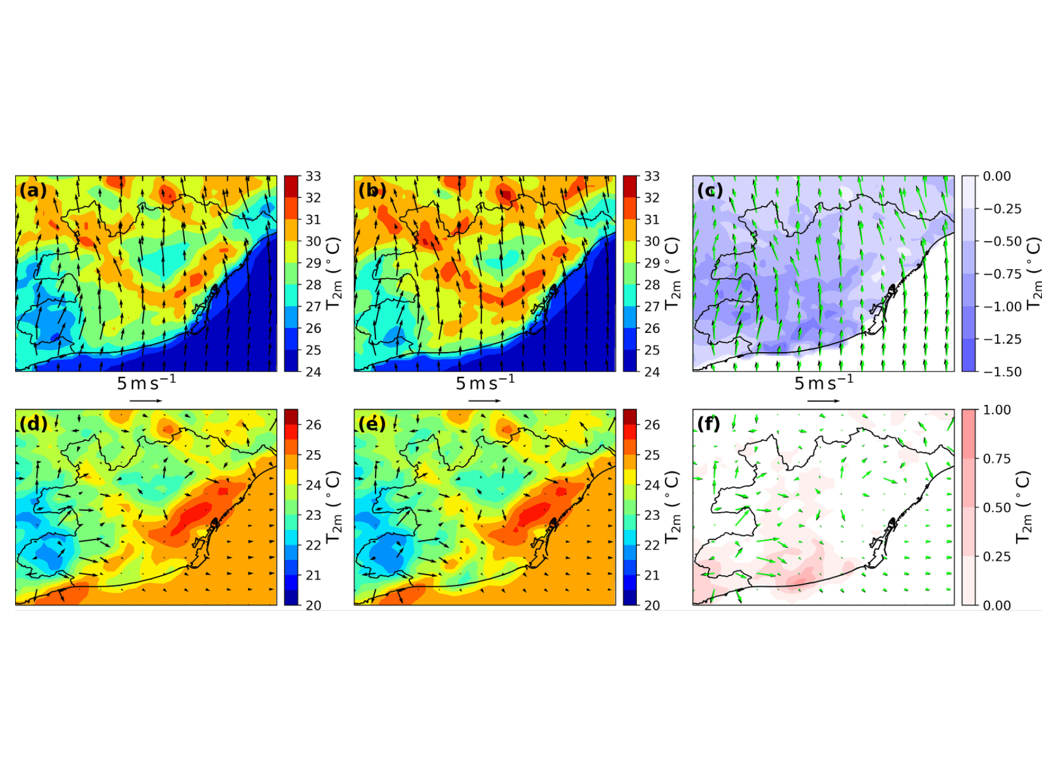
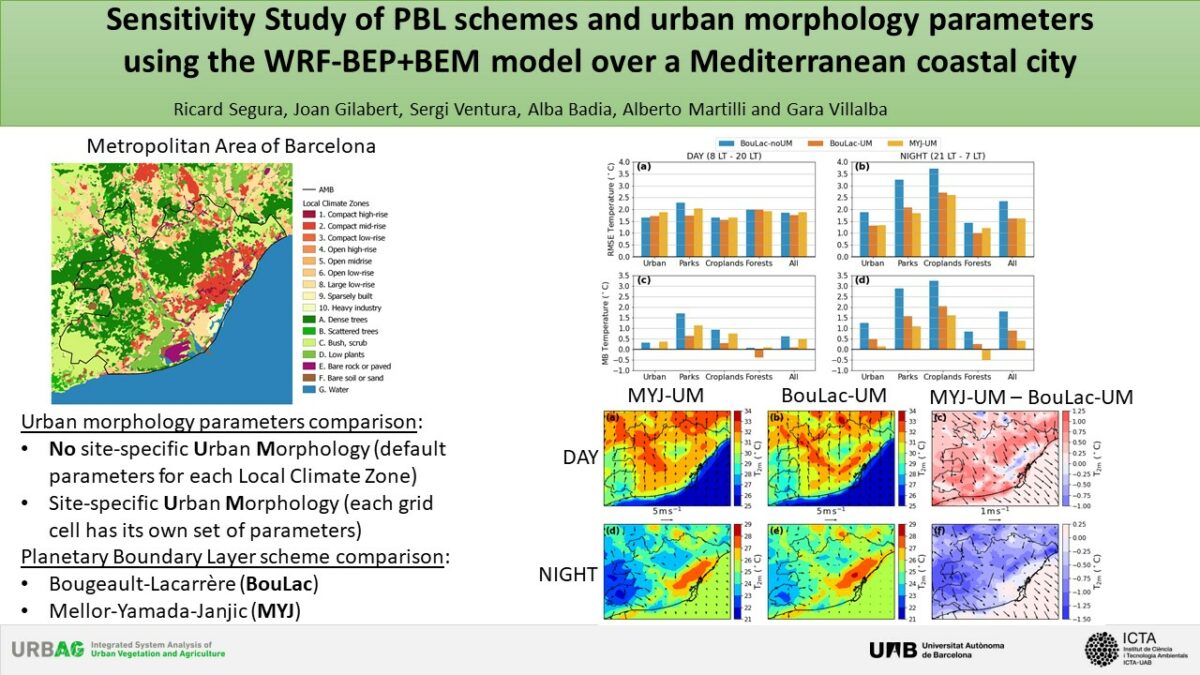
Title: Sensitivity study of PBL schemes and soil initialization using the WRF-BEP-BEM model over a Mediterranean coastal city / Due to increased urbanization and global warming, cities are experiencing more heat wave (HW) events that cause extreme heat stress. To mitigate such effects, a better understanding of the impact of urban morphology on the boundary layer development is needed.

Participation at the EGU General Assembly 2021

The URBAG members worked on three presentations during the EGU 2021 conference, where 18 155 scientists from 136 different countries have met. With approximately 13 000 users per day, the conference has been considered a resounding success. The sessions have been conditioned by the global Covid-19 pandemic, forcing it to be carried out in virtual format.