After a year and a half, the ATRAPA team returned to Warsaw this May to observe how the Nowe Centrum Warszawy—New Centre of Warsaw (NWC)—programme is progressing and transforming the city.
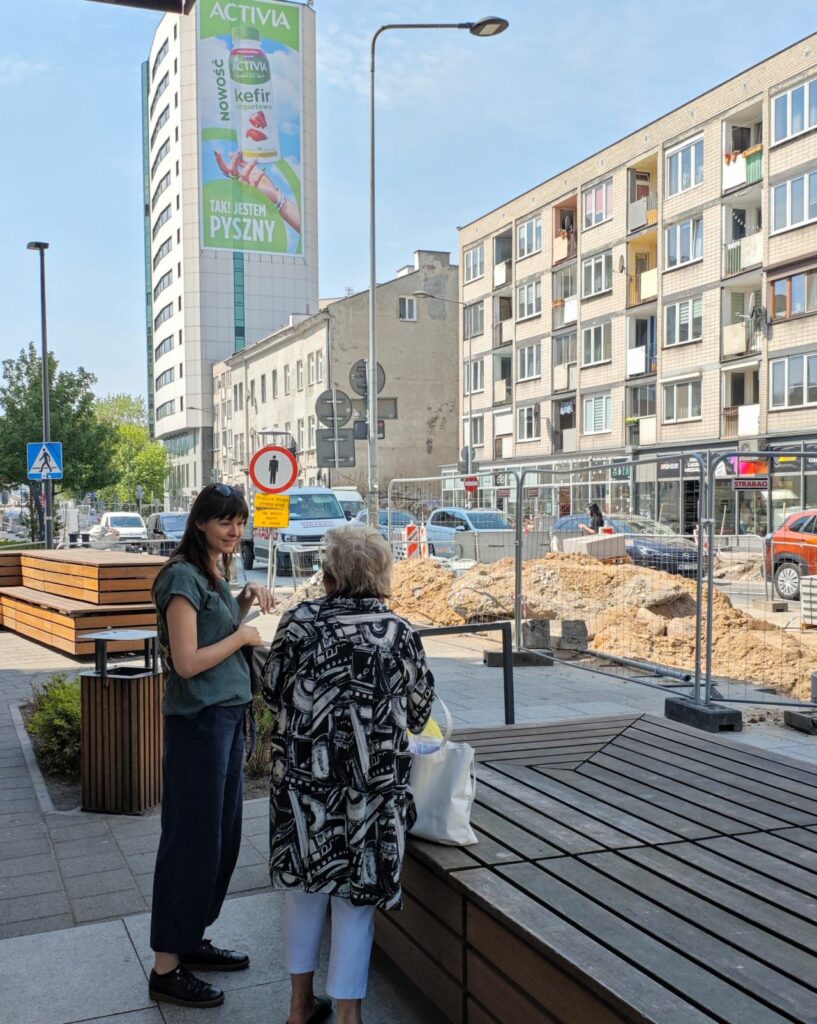
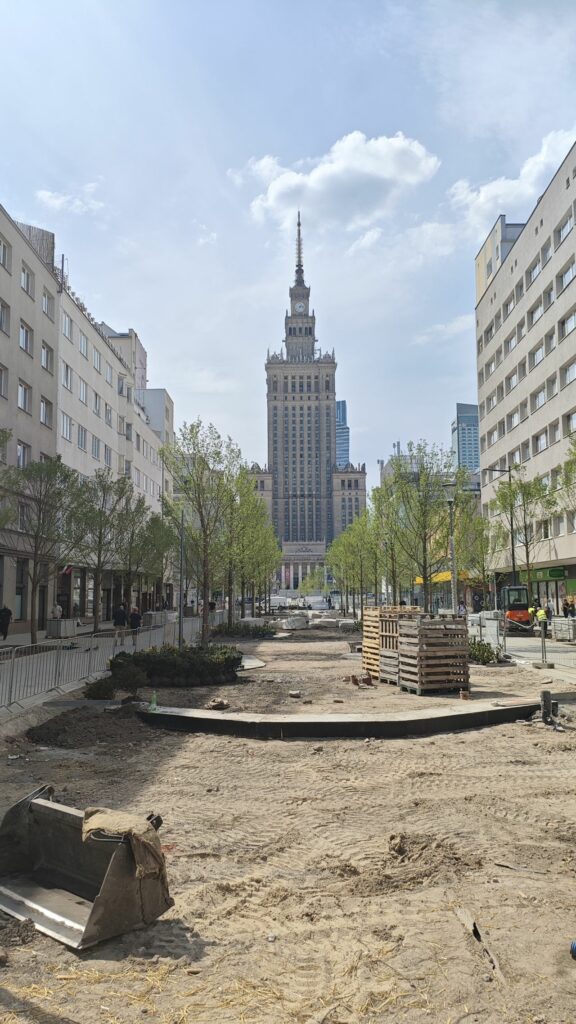
During our visit, we walked through the core areas of the NWC project, including Plac Centralny, Plac Pięciu Rogów, Zgoda Street and Złota Street. We also visited Krucza Street, which is awaiting its forthcoming transformation. Seeing these spaces in person allowed us to examine how individual street-level interventions are gradually becoming part of a broader transformation of Warsaw’s city centre.
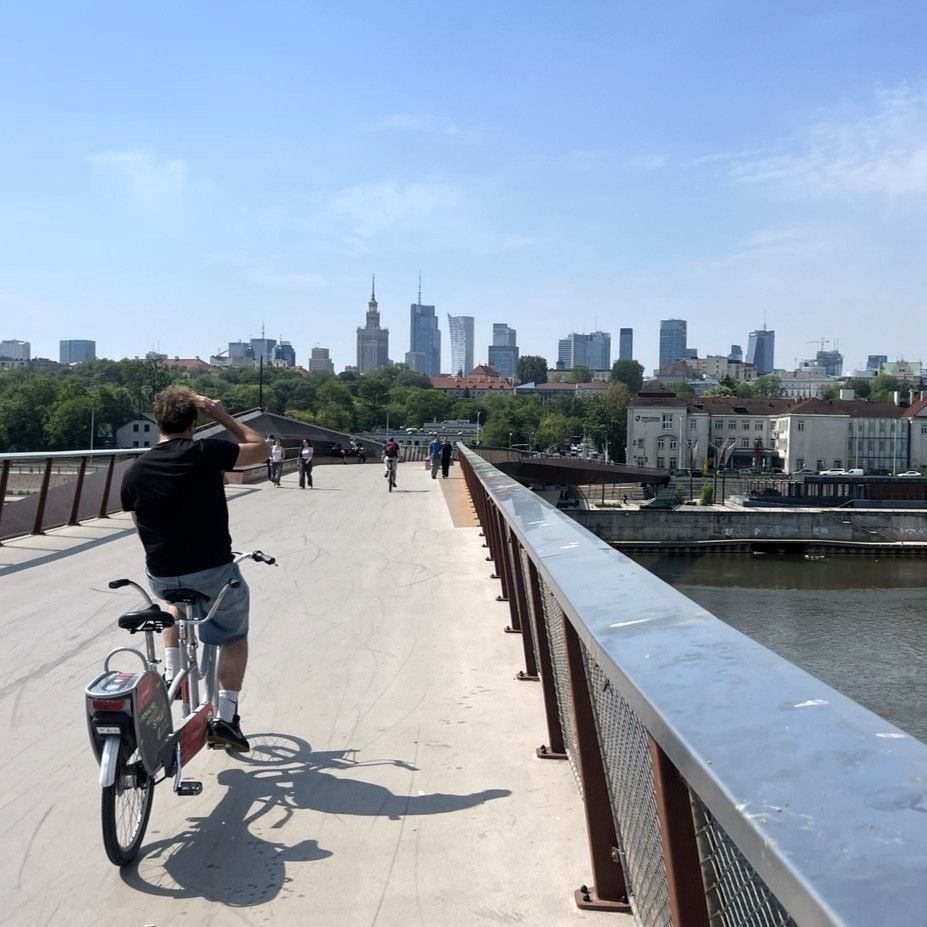
When we began the ATRAPA project, the Magdalena Abakanowicz pedestrian and cycling bridge over the Vistula River had not yet been completed. Today, the bridge has become an important new connection between the city centre and the Praga district. It is a fantastic addition for pedestrians and cyclists, but its influence extends beyond mobility: the new connection is also contributing to visible changes on the eastern side of the river.
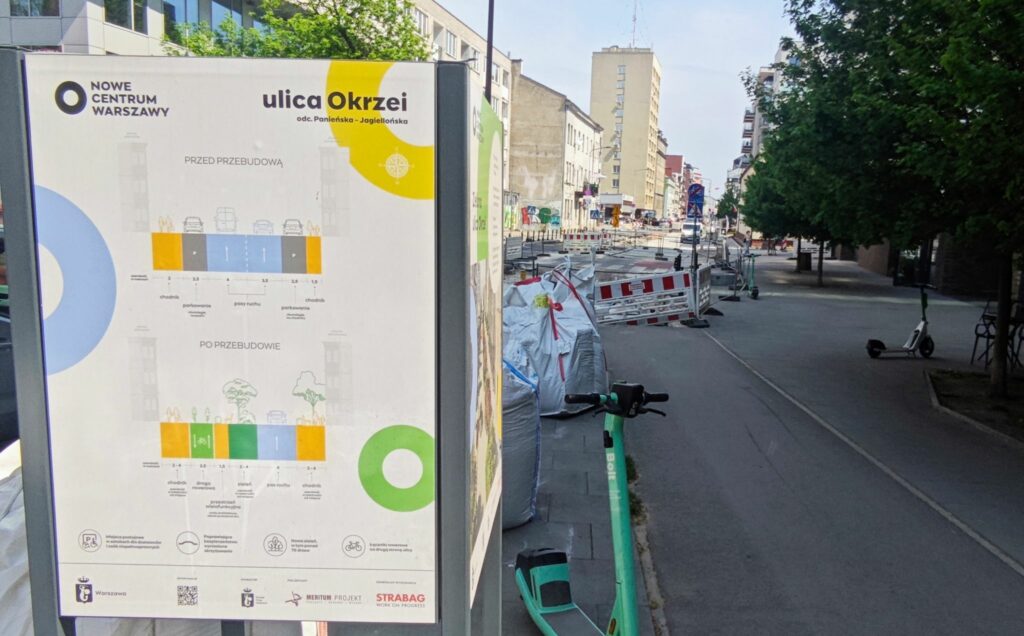
In Praga, Okrzei Street is currently being transformed as an extension of the Nowe Centrum Warszawy programme. Together, the bridge and the surrounding street transformations demonstrate how sustainable mobility interventions can connect neighbourhoods while reshaping public space on both sides of the Vistula.
We made the most of our time in Warsaw by meeting several local researchers whose expertise will help us better understand the geographical, political and economic dimensions of the city’s transformation. We met Marcel Świerkocki from the Faculty of Geography and Regional Studies at the University of Warsaw, Łukasz Drozda from the Faculty of Political Science and International Studies, and Anna Małgorzata Bartczak from the Faculty of Economic Sciences.
We also met with our collaborator Savannah Siekierski, who recently completed her Master’s degree in Urban Studies at Vrije Universiteit Brussel and is supporting ATRAPA’s research activities in Warsaw.
The visit provided an important opportunity to document the progress of Warsaw’s urban transformation, strengthen our local research collaborations and reflect on how new pedestrian and cycling connections are changing mobility, public space and relationships between different parts of the city.