


On Monday, 16 November 2026, the Research Group on Geography and Gender at the UAB inaugurated its 2026-2027 seminar series with the lecture “Filmar la resistencia: investigación socialmente comprometida con mujeres desplazadas en la zona fronteriza entre Colombia y Venezuela” (“Filming Resistance: Socially Engaged Research with Displaced Women in the Border Region between Colombia and Venezuela”), delivered by Dr. Yvonne Riaño, researcher at the Institute of Geography, University of Neuchâtel (Switzerland).
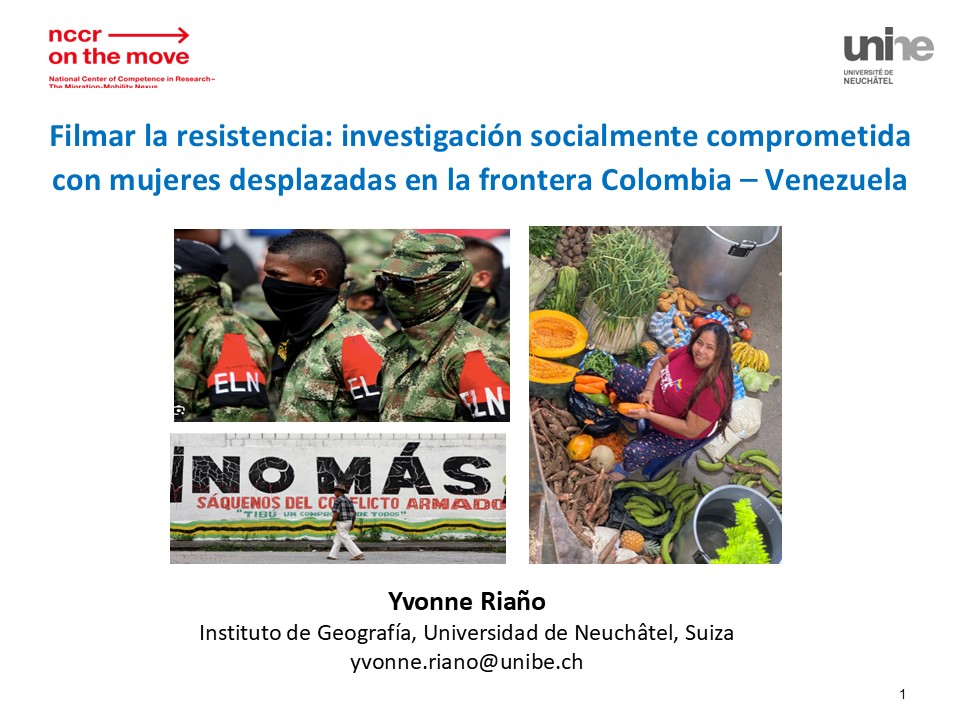
Dr. Yvonne Riaño presented research conducted in the Colombian region of Catatumbo, a border area with Venezuela that has been marked by a prolonged armed conflict and the presence of various armed groups competing for territorial control. In this context, violence has led to the forced displacement of numerous rural communities, with a particularly severe impact on women, who have been subjected not only to displacement from their territories but also to different forms of sexual violence used as tools of war.
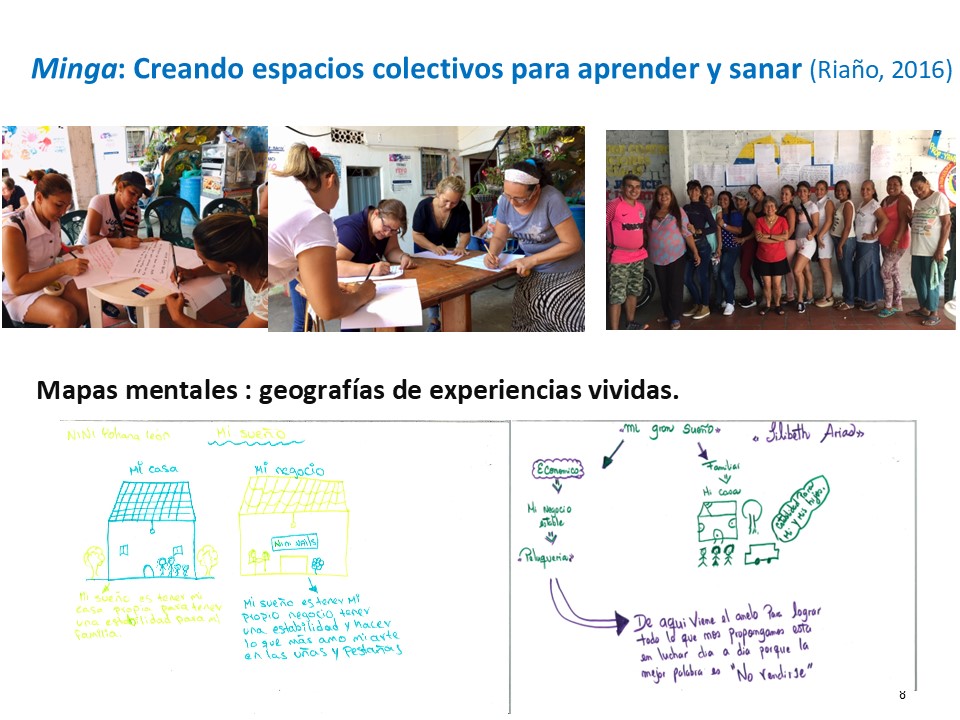
The speaker presented the results of a collaborative research project inspired by feminist and postcolonial perspectives that challenge the extractive practices of traditional research and advocate for a more horizontal and socially engaged production of knowledge. From this approach emerged the Minga methodology, a framework based on the co-production of knowledge and on sharing representational power with participants regarding their own lived experiences.
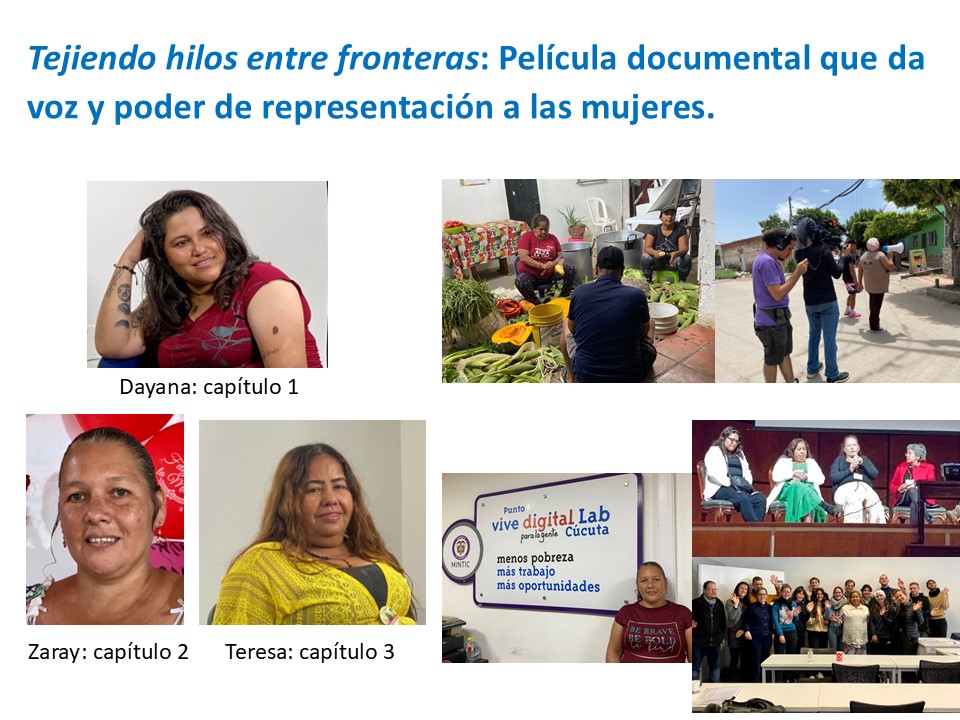
One of the project’s main outcomes was the collaborative production of the documentary Tejiendo hilos entre fronteras (“Weaving Threads Across Borders”), developed with the participation of three displaced Colombian women. Through their voices and narratives, the documentary portrays experiences of displacement, violence and exclusion, while also highlighting the many forms of resistance, resilience and peacebuilding fostered by the women themselves. The project seeks to challenge victimizing representations and to recognize women as active protagonists of their own stories.
Methodologically, the research combined participatory tools such as mental mapping, minga workshops and collaborative audiovisual production. These were conceived not only as research instruments but also as spaces for collective learning, reflection and healing. In this regard, the lecture highlighted the potential of participatory documentary filmmaking as a socially engaged research tool capable of generating critical knowledge, fostering women’s empowerment and making visible forms of resistance that often remain overlooked.
The final part of the seminar gave rise to a particularly rich and engaging discussion. Among other topics, participants reflected on the challenges and possibilities of collaborative methodologies, the importance of returning research findings to the communities involved, and the need for academic knowledge to circulate through local spaces and publications accessible to those who have participated in the research process. The discussion also addressed the relationship that Dr. Yvonne Riaño continues to maintain with the women who took part in the project and how their lives have evolved since the completion of the research.
Dr. Yvonne Riaño’s warm, thoughtful and deeply human way of communicating helped create a particularly moving and intellectually stimulating atmosphere. Her presentation successfully connected the methodological, political and personal dimensions of the research in a manner that was both accessible and inspiring.
The Research Group on Geography and Gender would like to thank Dr. Yvonne Riaño for her participation and for her valuable contribution to critical reflections on forced migration, gender-based violence, feminist methodologies, and everyday forms of resistance and peacebuilding.