
Universitat Autònoma de Barcelona (UAB)
The Universitat Autònoma de Barcelona (UAB), located in Bellaterra, is one of the major public universities in Spain. The UAB has been acknowledged for its teaching quality and attracting international talent. In the 2024 edition of the QS World University Rankings, the UAB placed first among Spanish universities, 149th in the world ranking and 63th within Europe. The UAB’s research covers extremely varied areas of knowledge into a single campus, which helps to promote multi-disciplinary research. UAB is also the hub of UAB Sphere, a knowledge ecosystem that includes research centres (most located on the UAB’s campus), local businesses, authorities, and the largest hospital network in Catalonia, collaborating in the social and economic development of the region. UAB has over 40,000 students (including 5,000 foreign students) and almost 6,000 researchers and teaching staff. UAB offers 117 bachelor’s degrees, 149 master’s degrees, 9 Erasmus Mundus master’s degrees and 74 doctoral programs. More than 700 dissertations are defended per year.
UAB coordinates PHYNEST and provides the academic framework for the doctoral programme, hosting fellows across departments: Physics, Chemistry, Chemical, Biological and Environmental Engineering, and Electronic Engineering department, plus Institute for the History of Science (iHC), and Institute of Environmental Science and Technology (ICTA). Its vibrant campus and interdisciplinary ecosystem make it an ideal environment for nurturing future leaders in science and sustainability.
Coordinator: Eva Pellicer
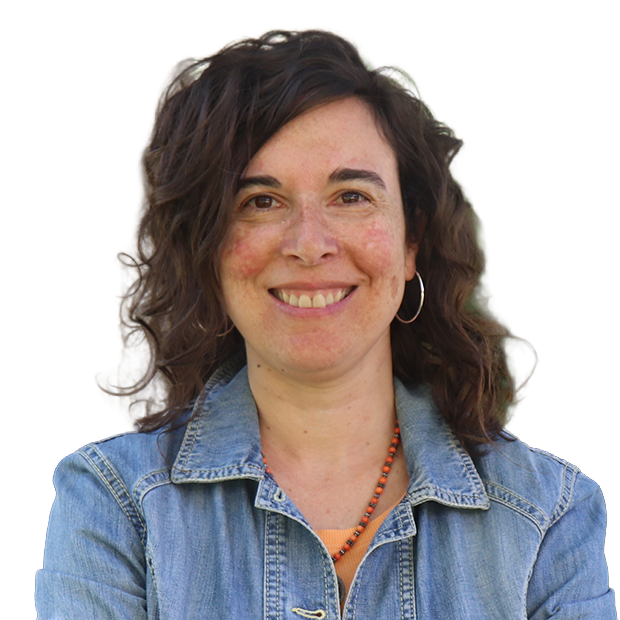
Project manager: Susana Aragón


Institute of Materials Science of Barcelona (ICMAB-CSIC)
ICMAB is a multidisciplinary research center of the Spanish National Research Council (CSIC), specializing in functional materials for energy, electronics, and nanomedicine. Located in the UAB campus, ICMAB is a Severo Ochoa Centre of Excellence and hosts over 500 researchers annually. Its mission is to generate and transfer knowledge in materials science through high-impact research and collaboration with industry. The institute offers state-of-the-art facilities, including a cleanroom (Nanoquim Platform), and is active in educational outreach and international projects. PHYNEST fellows at ICMAB will engage in pioneering research on superconducting materials for an efficient energy transition and benefit from a rich scientific ecosystem.

Catalonia Institute for Energy Research (IREC)
IREC is Catalonia’s reference public research center for energy technologies. Founded in 2008, it focuses on energy production, transformation, distribution, and efficient use, with a strong emphasis on renewable energy and sustainability. IREC operates across two main areas: long-term scientific research and market-oriented technology development. Its seven research groups cover topics such as energy storage, solar energy, hydrogen, smart grids, and climate-resilient buildings. PHYNEST fellows hosted at IREC will benefit from its applied research focus, industry partnerships, and involvement in European innovation platforms like PRIMA and BATTECH.
Institute of Microelectronics of Barcelona (IMB-CNM-CSIC)
IMB-CNM is Spain’s largest public research center in micro- and nanoelectronics, part of the CSIC network. Located on the UAB campus, it specializes in semiconductor devices, sensors, power electronics, and nanofabrication. The institute hosts eight research groups and operates a national cleanroom facility (ICTS), supporting advanced microfabrication and integration technologies. IMB-CNM is actively involved in European projects and industrial collaborations, and plays a key role in the development of sustainable electronic systems. PHYNEST fellows will have access to unique infrastructure and expertise in microelectronics applied to energy and environmental challenges.
Centre de Visió per Computador (CVC)
CVC is a leading non-profit research center in computer vision and artificial intelligence, based on the UAB campus. Founded in 1994, it conducts cutting-edge research in areas such as autonomous driving, medical imaging, robotics, and document analysis. CVC combines fundamental science with technology transfer, collaborating with industry and participating in major European projects like ELLIOT and ELSA. It is also a TECNIO-accredited center and actively promotes diversity, inclusion, and sustainability. PHYNEST fellows at CVC will explore the intersection of AI and sustainability, contributing to innovative solutions for environmental monitoring and energy efficiency.
Catalan Institute of Nanoscienceand Nanotechnology (ICN2)
The ICN2 is a leading research institute in nanoscience and nanotechnology, located on the UAB campus. It focuses on the unique properties of materials at the nanoscale, with applications in energy, health, and information technologies. ICN2 hosts over 200 researchers and has been recognized as a Severo Ochoa Centre of Excellence. Its multidisciplinary research groups work on advanced electron microscopy, 2D materials, nanobiosensors, spintronics, and magnetic nanostructures. ICN2 combines fundamental research with innovation and technology transfer, offering PHYNEST fellows access to cutting-edge facilities and expert mentorship in a dynamic and collaborative environment.

PHYNEST is supported by a diverse network of 24 Associated Partners from academia, industry, and the public sector. These institutions contribute to the programme by hosting fellows for secondments, participating in training events, and offering career development opportunities. Their involvement ensures that fellows gain exposure to a wide range of professional environments and perspectives.
Academic partners:
- University of Cagliari
- TU Dresden, IAPP
- Chalmers Tekniska Hogskola AB
- Technical University of Denmark
- Imperial College of London
- Universität zu Köln
- Vienna University of Technology
- Tampereen Korkeakoulusaatio sr, Tampere University
- École Polytechnique
- Dalhousie University
- Czech Metrology Institute
- Helmholtz-Zentrum Dresden-Rossendorf
- CNRS / UGA Laboratoire de Physique et Modélisation des Milieux Condensés
- Barcelona Supercomputing Center
- Institut de Recerca i Tecnologia Agroalimentàries
Non-academic partners:
- IDEADED S.L.
- Acquora SpA
- INGENII
- Deneb Medical, S.L.
Training partners:
- ThePaperMill
- DIVERSIunity
- Explainers Group S.A.U.
Communication partner:
- Parc de Recerca UAB (PRUAB)
Selection process partner:
- Agència de Gestió d’Ajuts Universitaris i de Recerca