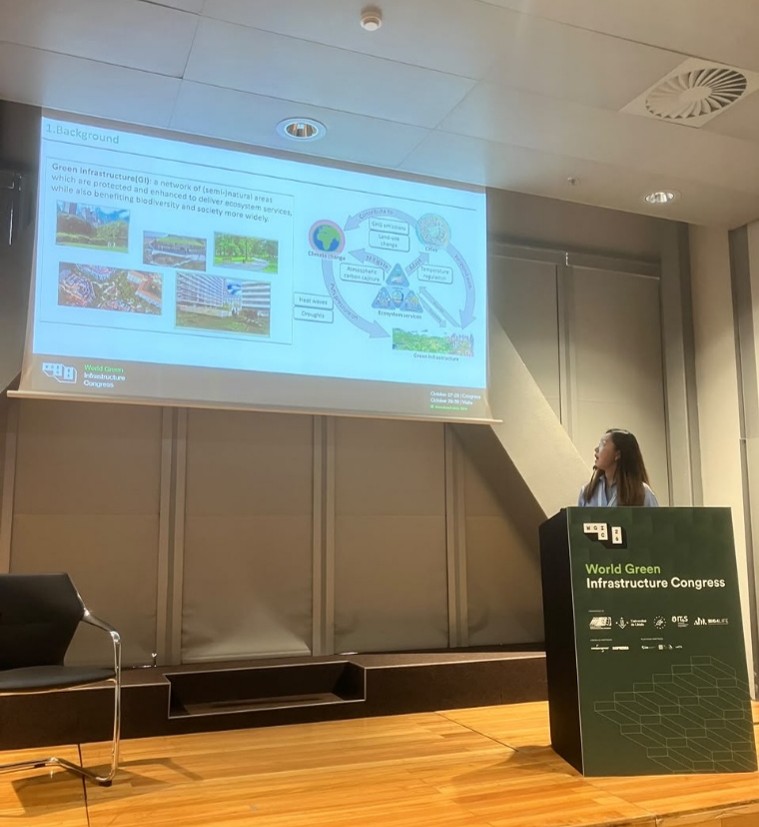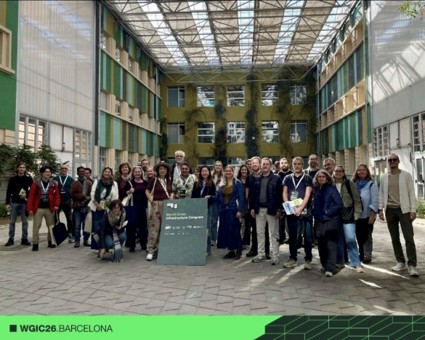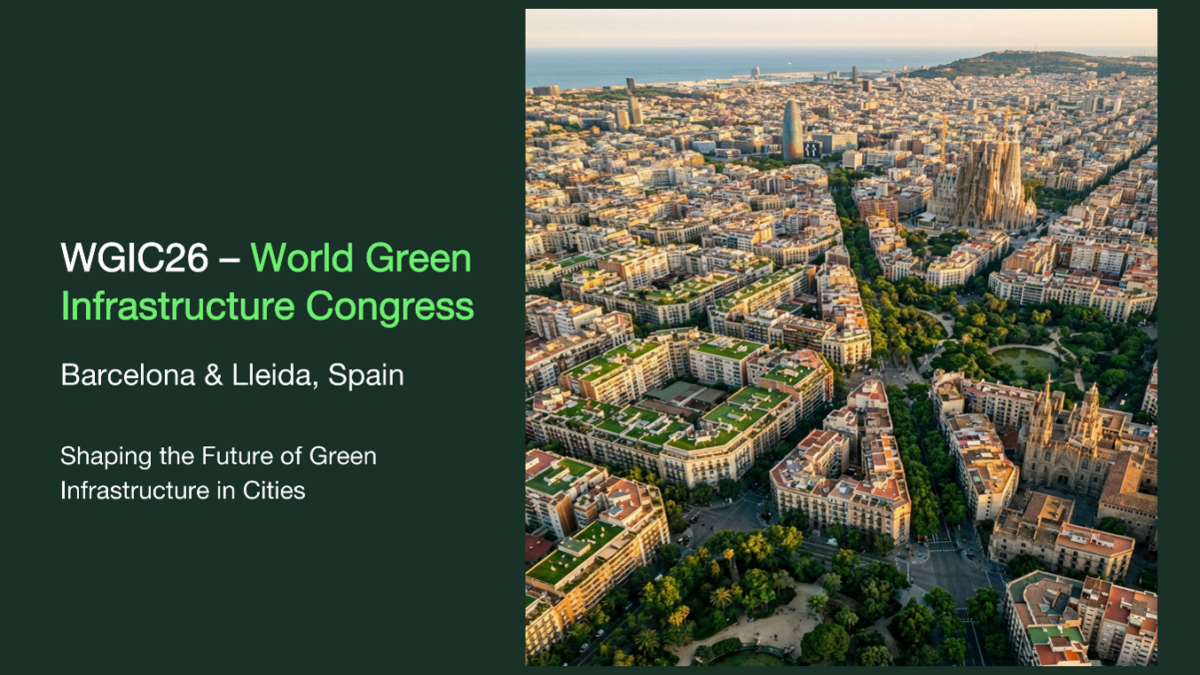
From 27th to 30th October 2026, Qing Luo attended the World Green Infrastructure Congress 2026 (WGIC26), held in Barcelona and Lleida, Catalonia, Spain. She presented her research entitled “How Much Can Urban Green Infrastructure Reduce CO₂ Levels? A Case Study of the Metropolitan Area of Barcelona.”
Green roofs, urban forests, and nature-based solutions are proposed as essential to creating more resilient, healthy, and liveable cities. WGIC26 brought together the people shaping policies and putting them into practice, including policymakers, researchers, architects, engineers, contractors, and city officials. The congress provided a platform to exchange cutting-edge research, practical solutions, and forward-thinking ideas to address the challenges and opportunities of urban green infrastructure.
Qing’s research shows how environmental modelling can provide insights for urban green space planning and management. In particular, she presented a framework that can be applied by other cities to estimate biogenic CO₂ exchanges between urban vegetation and the atmosphere and assess the effect of green infrastructure on offsetting anthropogenic CO₂ emissions.
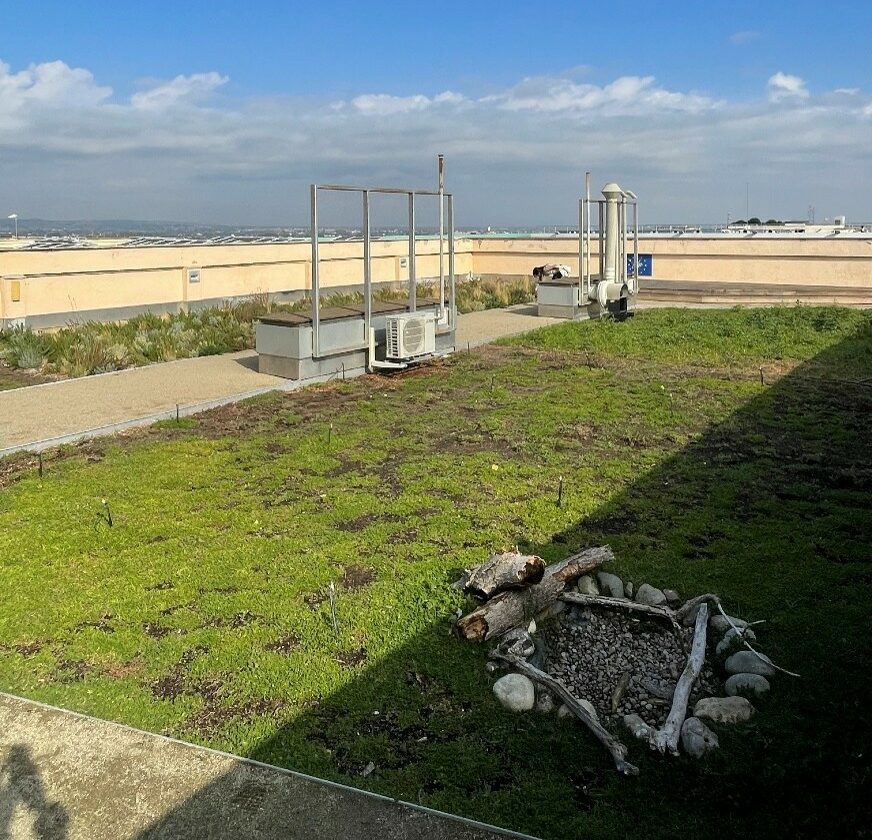
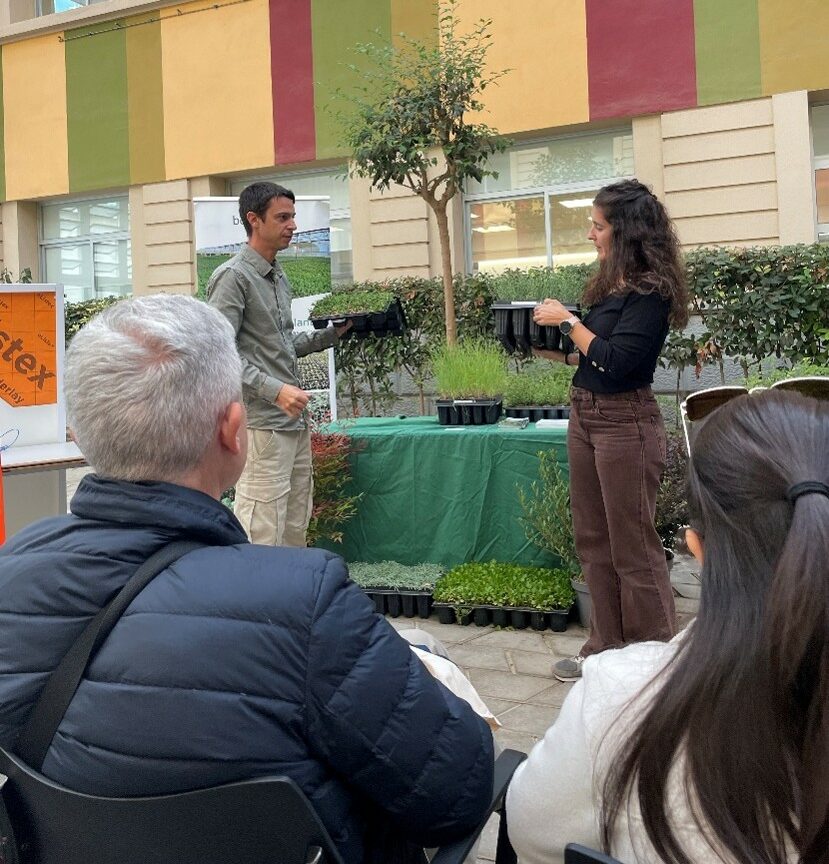
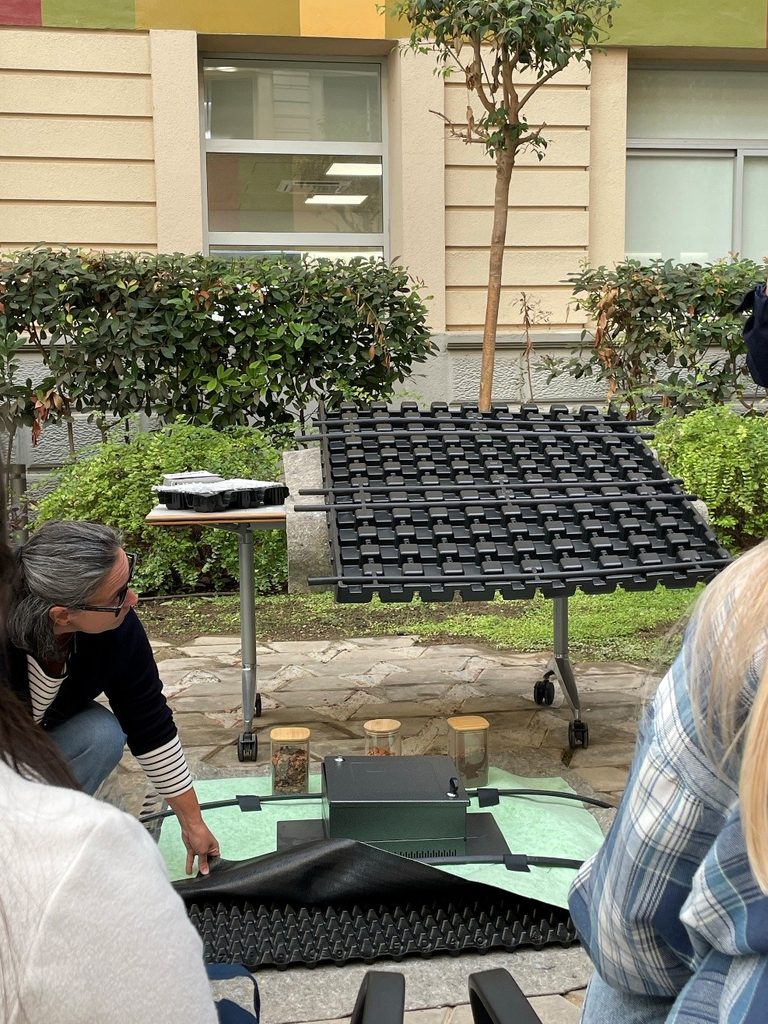
In addition, Qing visited the Lleida Agrobiotech Park and participated in a workshop featuring demonstrations of green roof technologies, including waterproofing, irrigation systems, biosolar roofs, and water management and drainage solutions.
The congress offered a valuable opportunity to see how scientific knowledge can be translated into practical solutions. It also highlighted the importance of raising public awareness of the environmental benefits of green roofs and promoting greener, more sustainable cities.