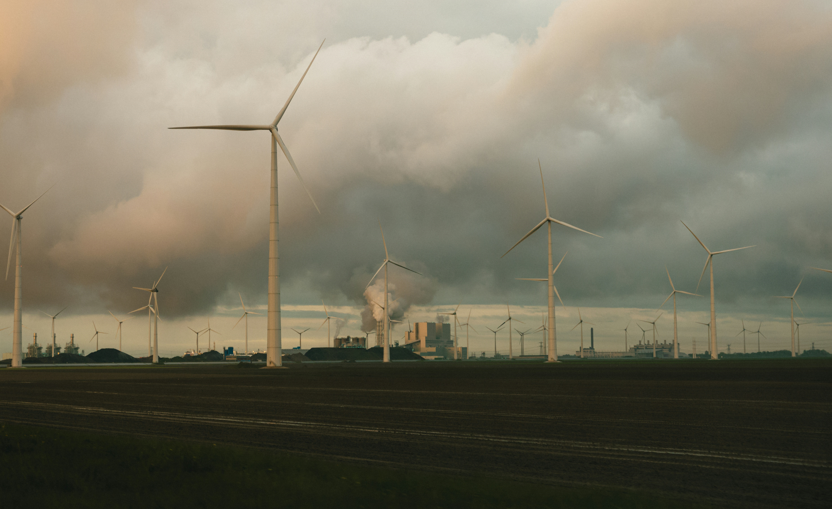
New preprint: Pathways to circular and regenerative urban agriculture through stakeholder-informed approaches

Title: Pathways to circular and regenerative urban agriculture through stakeholder-informed approaches. / Conventional agriculture typically relies on linear production systems that degrade soil and undermine sustainable resource management and climate change mitigation. Urban and peri-urban agriculture has the potential to shift from conventional approaches towards circular strategies that enhance soil health.
New publication in “Urban Sustainability”

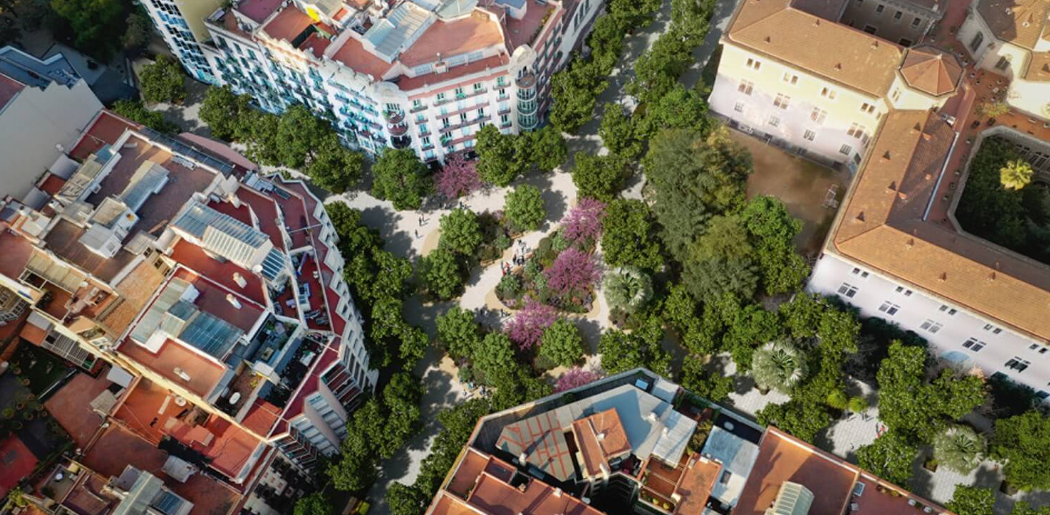
Title: Effect of land use changes on air quality: impacts of urbanization, urban vegetation, and agriculture / Urbanization converts natural landscapes into impervious surfaces, altering local climate and air quality. Greening strategies are adopted to mitigate these effects, yet their effectiveness depends on land use, urban form, geography, and climate interactions.

New preprint: Applying Recovered Nutrients and Pruning Waste to Enrich and Regenerate Agricultural Soils in Urban Agriculture: Effects on Emissions and Yield of Spinach and Sweet Potato

Title: Applying Recovered Nutrients and Pruning Waste to Enrich and Regenerate Agricultural Soils in Urban Agriculture: Effects on Emissions and Yield of Spinach and Sweet Potato / Nutrient recovery from urban waste can substitute chemical fertilizers, but nutrient cycling in depleted soils can be ineffective. A promising strategy is the incorporation of unstable, carbon-rich biomass waste, which can regenerate soil while closing carbon and nutrient loops.

New preprint: The role of soil moisture and shading in influencing the capacity of urban street trees to reduce heat stress

Title: The role of soil moisture and shading in influencing the capacity of urban street trees to reduce heat stress / Street trees can significantly reduce urban heat through shading and transpirative cooling, but their effectiveness may be compromised during heat waves with dry soil conditions. This study assesses the cooling potential of street trees using a modified BEP-Tree model.

New publication in “Environmental Research”

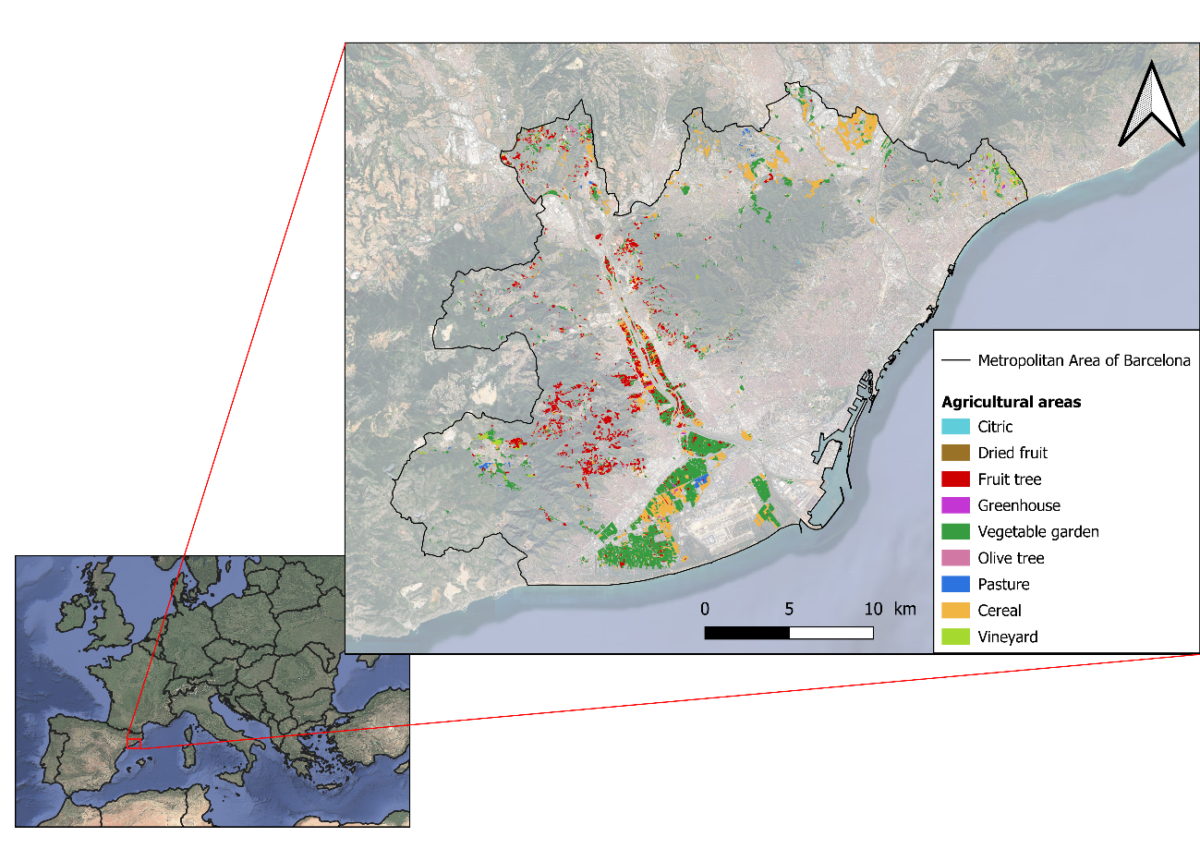
Title: Assessing the short-term air quality health impact from land-use changes during heatwaves: A health impact assessment in Barcelona Metropolitan Area / Heatwaves amplify air pollution, increasing public health risks, particularly in urban areas where land use influences the distribution of pollutants. This study examines the short-term health effects of air pollution during a two-week heatwave in the Barcelona Metropolitan Area under different land use scenarios.

New publication in “Journal of Geophysical Research: Atmospheres”

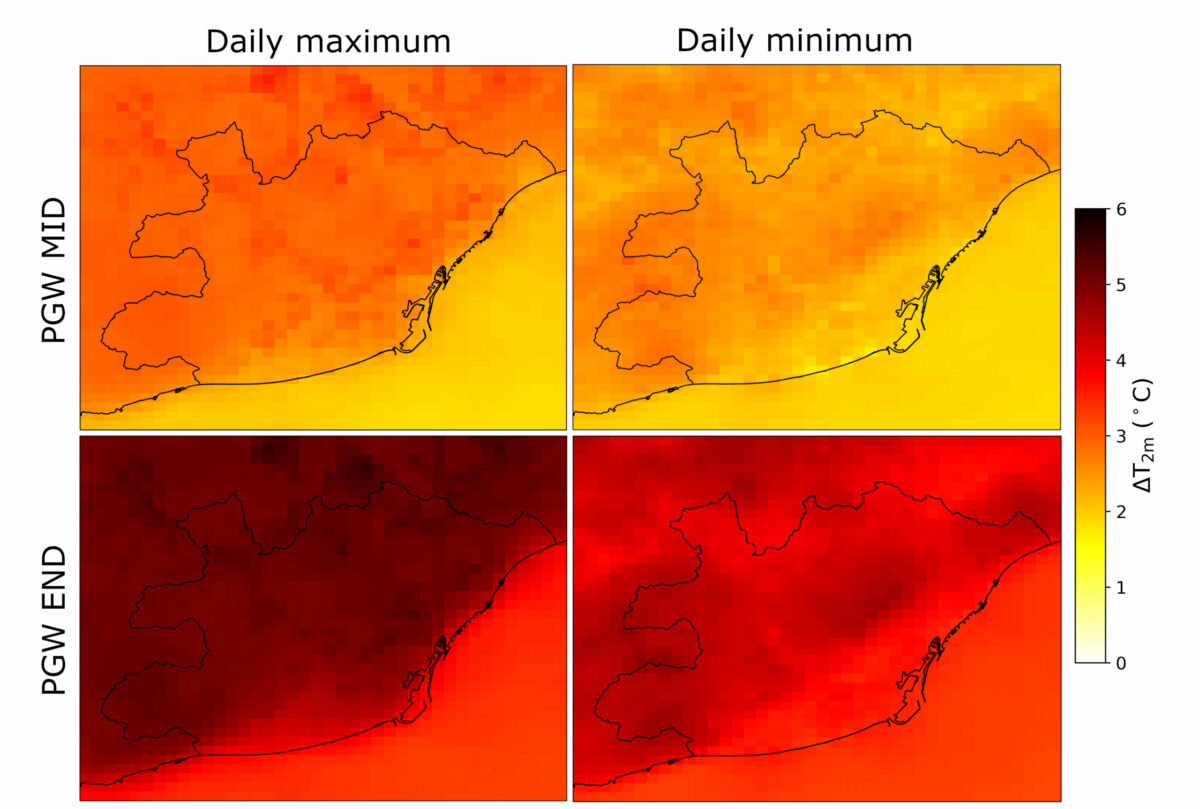
Title: Assessing the Intensity of Heatwaves in a Warming Climate at the Urban Scale: A Case Study of the Metropolitan Area of Barcelona/ Further understanding of the potential impact of future climate change on urban areas is needed. In this regard, we project recent heatwave (HW) episodes in the Metropolitan Area of Barcelona (AMB) with future climate conditions until 2100 using the pseudo global warming method.

New preprint: Adapting Urban Areas to Rising Temperatures: Strategies to Reduce Heat and Vulnerability in a Warming World

Title: Adapting urban areas to rising temperatures: strategies to reduce heat and vulnerability in a warming world / The need for cities to prepare for the increasing frequency, persistence, and intensity of heat waves (HWs) makes modeling these events essential for evaluating the effectiveness of heat adaptation strategies in the near future.

Presentation at the Urban Greenhouse Gas (GHG) Seminar

On 4th June, Qing Luo presented her work at the Urban Greenhouse Gas (GHG) Seminar, focusing on the role of greenery in reducing CO2 emissions. The monthly seminar series, hosted by Penn State's Earth-Atmosphere Interactions Lab(USA), aims to foster knowledge exchange and promote international collaboration on the GHG monitoring and estimation.

New preprint: Effect of land use changes on air quality: Impacts of urbanization, urban vegetation, and agriculture

Title: Effect of land use changes on air quality: Impacts of urbanization, urban vegetation, and agriculture / Urbanization transforms natural landscapes into impervious surfaces, altering local climate and air quality. Greening strategies are increasingly adopted to mitigate these effects, yet their efficacy depends on complex interactions among land use, urban form, geography, and climate.

URBAG participation at EGU25

URBAG took part in the EGU General Assembly 2025 in Vienna, where researchers presented their latest work on urban air quality, greenhouse gas fluxes, and nature-based solutions for climate adaptation. Three contributions by Qing Luo, Ricard Segura-Barrero and Svetlana Khromova showcased URBAG’s interdisciplinary approach to tackling climate challenges in urban environments.