Workshop: Green roofs in Oslo by 2030

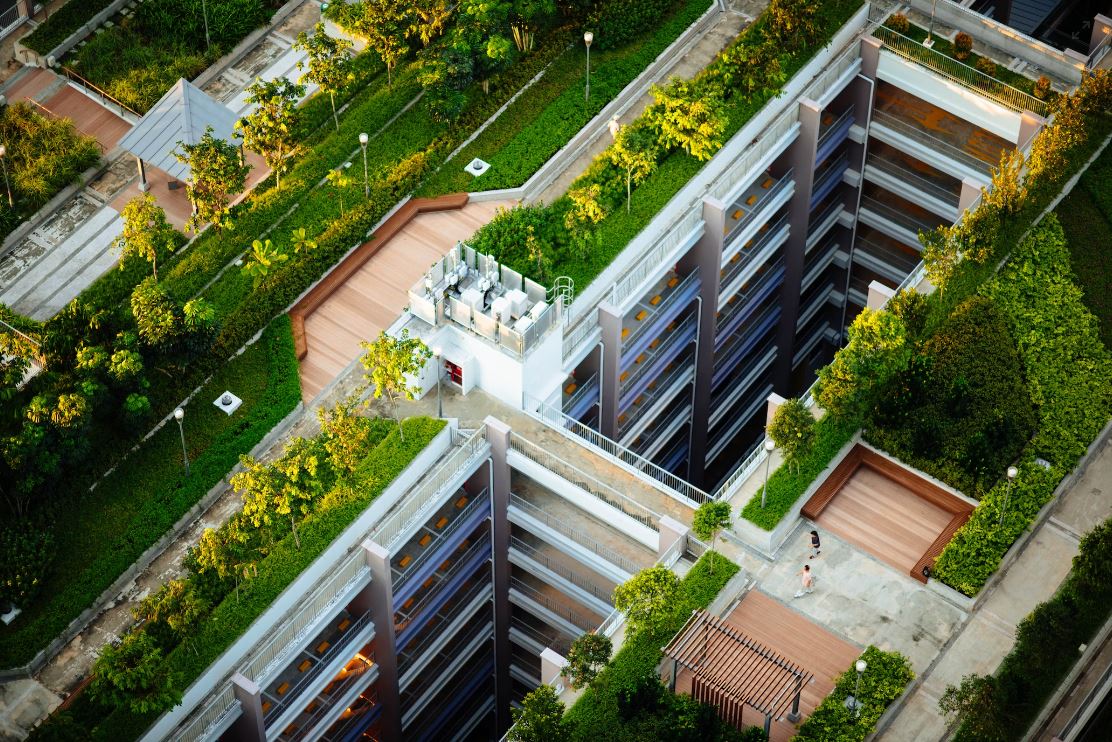
Green roofs in Oslo by 2030: Stakeholder workshop for co-creating a common understanding of green roofs’ impacts and relevance for the city / An online participatory workshop was conducted involving various stakeholders from the public, academic, and private sectors. URBAG has undertaken the challenge of creating new green spaces within urban environments by evaluating how green roofs can impact local and global vulnerabilities.

New publication in the “International Journal of Applied Earth Observation and Geoinformation”

Title: Assimilating Sentinel-2 data in a modified vegetation photosynthesis and respiration model (VPRM) to improve the simulation of croplands CO2 fluxes in Europe / This paper presents an assimilation of high-resolution Sentinel-2 indices with eddy covariance measurements at selected European cropland flux sites in a new modified version of Vegetation Photosynthesis Respiration Model (VPRM).

New publication in “Sustainable Cities and Society”

Title: Assessing Nature-based solutions in the face of urban vulnerabilities: A multi-criteria decision approach / Nature-based solutions (NBS) are increasingly employed to address urban challenges. Typically, NBS planning emphasizes environmental impacts and ecosystem services, often overlooking their role in addressing vulnerabilities.

New publication in “Environmental Research Communications”

Title: Predicting willingness to pay and implement different rooftop strategies to characterize social perception of climate change mitigation and adaptation / This study aims to characterize the social perception of climate resilience development, in particular the implementation of sustainable urban rooftop strategies, to support policy makers and enable individual action.

New publication in “Heliyon”

Title: Measuring BVOC emissions released by tomato plants grown in a soilless integrated rooftop greenhouse / Urban design is currently promoting the inclusion of plants in buildings. However, plants emit biogenic volatile organic compounds (BVOCs), which alone or in combination with other airborne molecules such as CO2, may result in a general increase in tropospheric pollution.