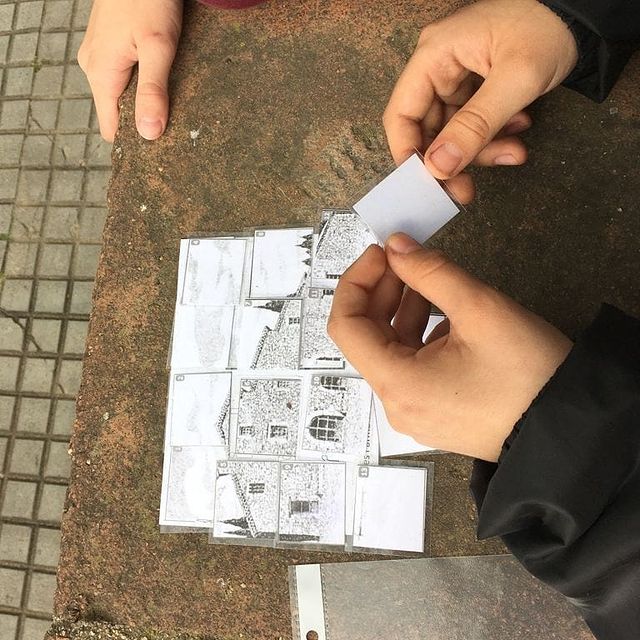
La pedagogia de l’aprenentatge lúdic se centra en la persona, els recursos i les eines que ofereix l’entorn d’aprenentatge. Es construeix en entorns textuals rics i multimodals que estimulen a les persones a investigar, sorprendre’s, conceptualitzar, produir i donar sentit.
L’aprenentatge lúdic és un enfocament pedagògic que utilitza el joc com una eina d’aprenentatge, integrant de manera efectiva el contingut acadèmic amb l’experiència lúdica. És important entendre que el joc no és simplement una activitat recreativa, sinó que ha de tenir una intencionalitat educativa clara. Les propostes d’aprenentatge lúdic han d’estar dissenyades per a complir objectius educatius específics, no sols per a entretenir.
Beneficis de l’aprenentatge servei
- Fracàs segur: Permet experimentar i aprendre de l’error, la qual cosa desenvolupa resiliència.
- Exploració creativa: Fomenta la creativitat, la imaginació i la capacitat d’explorar noves perspectives.
- Col·laboració: Promou el treball en equip i l’intercanvi d’idees.
- Apoderament: Els estudiants prenen el control del seu procés d’aprenentatge.
- Aprenentatge memorable: Fa que els conceptes siguin més fàcils de recordar i aplicar en diferents contextos.
Aspectes a tenir en compte per a aplicar l’aprenentatge servei
- Intencionalitat educativa: Assegurar-se que el joc no sigui sol entreteniment, sinó que tingui objectius pedagògics clars. El joc ha d’estar vinculat al contingut que es vol ensenyar i ha de fomentar el desenvolupament de competències tant cognitives com emocionals i procedimentals.
- Propostes noves: És fonamental que les activitats lúdiques no es limitin als formats tradicionals de jocs ja coneguts. Hem d’anar més enllà del ja fet, explorant noves maneres d’integrar el joc i la pedagogia, per a oferir experiències innovadores que desafiïn la creativitat dels participants.
- Equilibri entre joc i aprenentatge: El joc ha d’estar dissenyat de manera que es pugui mesurar l’aprenentatge i s’identifiquin clarament les competències que s’estan desenvolupant, no sols l’entreteniment.
Referències bibliogràfiques
- Baker, S. T., Le Courtois, S., & Eberhart, J. (2021). Making space for children’s agency with playful learning. International Journal of Early Years Education, 1-13. https://doi.org/10.1080/09669760.2021.1997726
- Brooks, E. P. (2013). Ludic engagement designs: creating spaces for playful learning. In Universal Access in Human-Computer Interaction. Applications and Services for Quality of Life: 7th International Conference, UAHCI 2013, Held as Part of HCI International 2013, Las Vegas, NV, USA, July 21-26, 2013, Proceedings, Part III 7 (pp. 241-249). Springer Berlin Heidelberg. https://link.springer.com/chapter/10.1007/978-3-642-39194-1_28
- Johnston, O., Wildy, H., & Shand, J. (2022). Teenagers learn through play too: communicating high expectations through a playful learning approach. The Australian Educational Researcher, 1-20. https://doi.org/10.1007/s13384-022-00534-3
- Leather, Mark, Nevin Harper, and Patricia Obee. “A pedagogy of play: Reasons to be playful in postsecondary education.” Journal of Experiential Education 44.3 (2021): 208-226. https://doi.org/10.1177/1053825920959684
- Tawfique, M., Alam, A., Ergler, C., & Freeman, C. (2025). Activating the playful city: A review of ludic urbanism and introducing the ludic continuum framework. City, Culture and Society, 42, 100641. https://doi.org/10.1016/j.ccs.2025.100641
- Henricks, T. S. (1999). Play as Ascending Meaning: Implications of a General. Play contexts revisited, 2, 257. https://files.eric.ed.gov/fulltext/EJ1023798.pdf
- Heljakka, K. (2023, January). Building playful resilience in higher education: Learning by doing and doing by playing. In Frontiers in Education (Vol. 8, p. 1071552). Frontiers. https://doi.org/10.3389/feduc.2023.1071552
- Jørgensen, H. H., Schrøder, V., & Skovbjerg, H. M. (2023). Playful learning, space and materiality: An integrative literature review. Scandinavian Journal of Educational Research, 67(3), 419-432. https://doi.org/10.1080/00313831.2021.2021443
- Kangas, M., Siklander, P., Randolph, J., & Ruokamo, H. (2017). Teachers’ engagement and students’ satisfaction with a playful learning environment. Teaching and Teacher Education, 63, 274-284.https://doi.org/10.1016/j.tate.2016.12.018
- Mardell, B., Ryan, J., Krechevsky, M., Baker, M., Schulz, T. S., and LiuConstant, Y. (2023). A pedagogy of play: Supporting playful learning in classrooms and schools. Cambridge, MA: Project Zero. https://pz.harvard.edu/projects/pedagogy-of-play
- Melasalmi, A., Siklander, S., Kangas, M., & Hurme, T-R. (2023). Agentic playful pre-service teachers: positionings from teacher-initiated playful teacher to community-shared playful teacher. Frontiers in education, 8, [1102901]. https://doi.org/10.3389/feduc.2023.1102901
- Moseley, A. (2018). Learning at the Edge of the Magic Circle: A Case for Playful Learning (Doctoral dissertation, University of Leicester).. https://doi.org/10.25392/leicester.data.11663550.v1
- Nørgård, Rikke Toft, Claus Toft-Nielsen, and Nicola Whitton. “Playful learning in higher education: developing a signature pedagogy.” International Journal of Play 6.3 (2017): 272-282. https://doi.org/10.1080/21594937.2017.1382997
- Rice, L. (2009). Playful learning. Journal for Education in the Built Environment, 4(2), 94-108.https://doi.org/10.11120/jebe.2009.04020094
- Root-Bernstein, M. (2014). Inventing imaginary worlds: From childhood play to adult creativity across the arts and sciences. Rowman & Littlefield.
- Schmoelz, A. (2017). On Co-Creativity in Playful Classroom Activities. Creativity. Theories – Research – Applications. https://doi.org/10.1515/ctra-2017-0002
- Størksen, I., Rege, M., Solli, I. F., ten Braak, D., Lenes, R., & Geldhof, G. J. (2023). The playful learning curriculum: A randomized controlled trial. Early Childhood Research Quarterly, 64, 36-46. https://doi.org/https://doi.org/10.1016/j.ecresq.2023.01.015
- Tonkin, A., & Whitaker, J. (Eds.). (2019). Play and playfulness for public health and wellbeing. Routledge. https://doi.org/10.4324/9781351010450
- Valdivia-Vizarreta, P., & Montalvan Castilla, J. E. (2024). Flexibility and playful learning as strategies for a transformative pedagogy in higher education. UiS Scholarly Publishing Services, 1(1), 1-19. https://doi.org/10.31265/USPS.295
- Whitton, N. (2018). Playful learning: tools, techniques, and tactics. Research in Learning Technology, 26.https://doi.org/10.25304/rlt.v26.2035
- Developing playful cultures in education Invited talk for Playful Learning SIG
https://pure.au.dk/portal/files/105145399/PL_SIG.pdf