Human-Centric Cities in the Age of AI: Connectivity, Inclusion and Opportunity for All
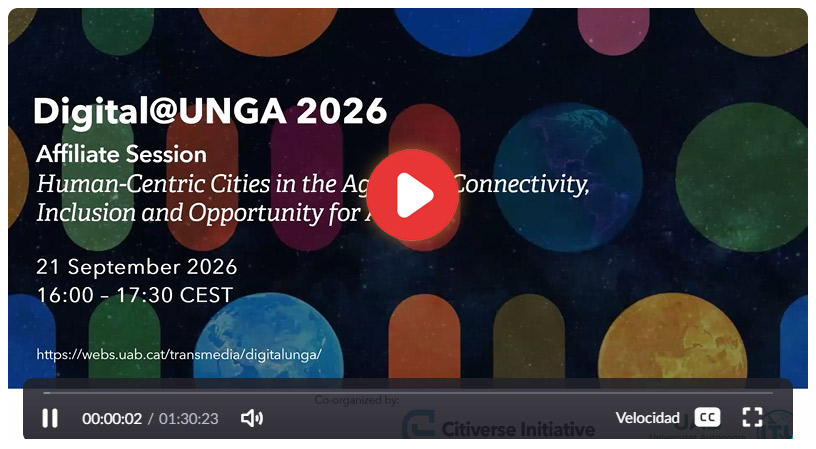
This side event, held as part of Digital@UNGA, is jointly organized by the Universitat Autònoma de Barcelona (UAB) and the International Telecommunication Union (ITU) under the Global Initiative on AI and Virtual Worlds – Discovering the Citiverse.
Monday 21 September online
Digital UNGA side event on Human-Centric Cities in the Age of AI: Connectivity, Inclusion and Opportunity for All- Pantalla compartida con vista del orador
Agenda
- 16:00 Opening remarks: Aline Machado de Matta, Head of the Geneva Office and Head of the UN Innovation Technology Accelerator for Cities, UN-Habitat
- 16:05 Presentation of speakers and ongoing work at ITU, Pilar Orero
- Ugliesa Stankov, Researcher, Serbia
- Bamidele Adebisi, MMU, Professor, UK
- Nefeli Georgakopoulou, Researcher, CERTH Greece
- Juan A. Relaño, CIIO BOSCH Spain
- 16:15 Debate: Moderator, Hlekiwe Kachali, Researcher
- 17:20 Closing remarks: Cristina Bueti, ITU Focal Point on Smart Sustainable Cities
The panel will explore how artificial intelligence can be harnessed to advance the public good while fostering responsible innovation across the public and private sectors. It will examine how digital urban transformation can be guided by human rights, sustainability, inclusion, and equity, ensuring that AI delivers tangible benefits for people, communities, and cities.
The panel will focus on three core pillars
- Connectivity: Leveraging Internet of Things (IoT) sensors, digital twins, and AI-driven data trusts to optimize urban infrastructure (such as traffic, energy, and water management) in real-time. It emphasizes using these tools to build predictive, evidence-based responses to crises rather than relying on reactive measures.
- Inclusion: Addressing the socio-economic and digital divides across urban populations. A central goal is ensuring that vulnerable groups have equal access to digital services and are involved in participatory planning processes.
- Opportunity for All: Fostering innovation ecosystems that support local entrepreneurs and small-to-medium enterprises (SMEs). It explores how AI can be used to expand access to lifelong learning, create quality local jobs, and enhance municipal service delivery for every resident.
Key SDG Challenges & Framework Impacts
SDG 11: Sustainable Cities and Communities UN-Habitat’s International Guidelines on People-Centred Smart Cities warn that digital transformations in urban spaces can result in «techno-centrism». If AI infrastructure is unevenly distributed across a city, it excludes low-income or marginalized neighborhoods from vital services and economic opportunities.

SDG 10: Reduced Inequalities Digital inclusion does not automatically translate to social equity. Algorithmic biases, exclusionary digital designs, and uneven access to digital skills can digitize existing systemic inequalities and penalize vulnerable populations within urban systems.
SDG 8: Decent Work and Economic Growth As smart cities automate services, there is a risk of displacing traditional workforces and widening the gap between tech-enabled elites and underrepresented local workforces. The focus requires supporting local SMEs and fostering inclusive innovation.

SDG 16: Peace, Justice and Strong Institutions AI applications, such as surveillance and autonomous policing systems in cities, require transparency and public oversight to maintain trust and prevent the erosion of human rights.
PARTICIPANTS
Aline Matta
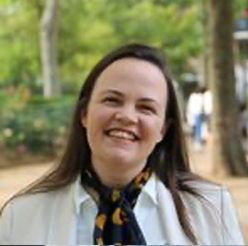
Aline Matta is a Senior Programme Management Officer at the United Nations Human Settlements Programme (UN-Habitat) and currently serves as Head of the Geneva Liaison Office. At UN-Habitat, Ms. Matta also oversees the United Nations Innovation Technology Accelerator for Cities (UNITAC) and the Data and Innovation
Section, where she leads the People-Centered Smart Cities Programme and coordinates the Global Urban Data Coalition. Prior to her current role, Ms. Matta worked at the OECD and held senior positions within the Brazilian government, with experience spanning smart cities, digital transformation, and service across public, private, and non-profit sectors. She holds a Master’s degree in Development, Society and International Cooperation.
Dr. Hlekiwe Kachali

Dr. Hlekiwe Kachali is a preeminent leader with over two decades’ experience spanning the public, private and academic spheres. Hlekiwe’s expertise encompasses the spectrum of the mobile, digital and emerging technology ecosystems with contributions ranging from shaping policy and driving standardisation to pioneering research, innovative design and impactful implementation.
Driven by a dedication to social empowerment, a significant focus of Hlekiwe’s work is at the critical intersection of technology and fundamental rights. Hlekiwe is particularly devoted to harnessing the transformative power of technology to confront pressing global challenges; utilising technology to empower unders
Professor Uglješa Stankov
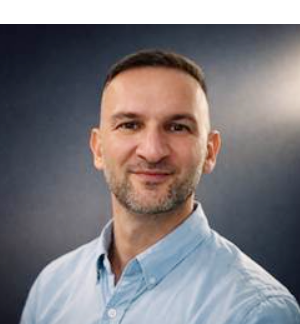
Professor Uglješa Stankov is a Full Professor at the University of Novi Sad, Faculty of Sciences, Department of Geography, Tourism and Hotel Management, and Co-founder of Minds Europe – Institute for Research Excellence and Technological Advancement.
His research focuses on smart tourism technologies, digital wellbeing, calm technology design, technology-assisted mindfulness, location intelligence, environmental research, sustainability, and the application of emerging technologies in tourism, education, and service environments.
He is the author of more than 120 scientific papers, four books, and numerous conference contributions, and his work is among the most cited in tourism research in Serbia. He has participated in and coordinated international projects funded through Horizon Europe, Erasmus+, COST and other programmes, and has served as an evaluator for major international initiatives, including the European Capital of Culture Novi Sad 2022 impact assessment, Expo 2020 Dubai sustainability impact assessment, and the European Capitals of Smart Tourism.
Professor Bamidele Adebisi
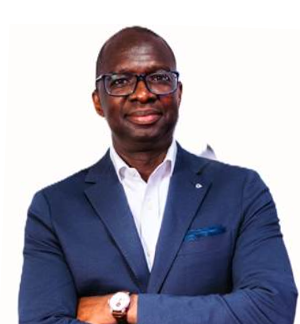
Professor Bamidele Adebisi, MBE is Professor of Intelligent Infrastructure Systems and Director of Smart Communities and Innovations at Manchester Metropolitan University. He contributes as a UN expert on AI-enabled urban systems: digital twins, spatial intelligence, and immersive technologies for sustainable city development.
He also serves as a Cluster Lead for the ITU–UN Digital Development Goals initiative.
His career features significant high-impact research and industry collaboration, including senior leadership on the €29M EU Horizon 2020 Triangulum project and academic leadership of the BEIS-funded NIceEnergi project in Nigeria, among other smart sustainable cities and communities projects. He was awarded a Member of the Order of the British Empire (MBE) in the 2025 King’s New Year Honours for excellence in knowledge transfer. A two-time UK “Best of the Best” KTP Project of the Year winner (2020, 2024), he has also received major national recognition for collaborative impact.
With over 250 publications, he is a Fellow of the IET, Senior IEEE member, Fellow of the Higher Education Academy, and Chartered Engineer, as well as a globally sought-after thought leader and advisor in AI and sustainable infrastructure.
Nefeli Georgakopoulou

Nefeli Georgakopoulou is an architect and researcher working at the intersection of technology, the arts, and society. She holds a PhD in Aesthetics, Science, and Technology of the Arts from Paris 8 University, with a specialization in digital images and virtual reality.
Since 2019, she has been a Research Associate at the Information Technologies Institute (ITI) of the Centre for Research and Technology Hellas (CERTH). Her work explores extended reality (XR), multisensory interaction, and participatory design, with a focus on how immersive technologies and arts can foster social engagement, cultural innovation, and new forms of spatial experience. She has participated in European S+T+ARTS projects MindSpaces and ReSilence, and currently serves as Project Manager of the SPICE EU project, which aims to develop new models of participation in neighbourhood design and transformation.
Juan A. Relaño
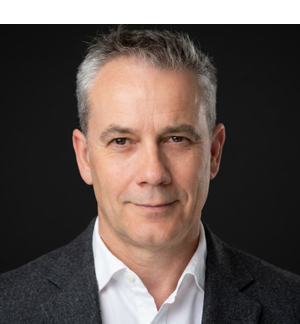
Juan A. Relaño is an international technology and innovation leader dedicated to building bridges between industry, academia and public institutions to accelerate responsible digital transformation. At Bosch Spain, he leads innovation and digital transformation initiatives while fostering collaborative ecosystems that translate emerging technologies into real societal impact.
He created Bosch’s Open Innovation Programme in Spain, bringing together corporations, startups, universities and research centres to accelerate AI and Industry 4.0 innovation. Among these initiatives, he established the Honorary Chair on Artificial Intelligence of Things (AIoT) with the Universidad Complutense de Madrid, promoting collaborative research and talent development in human-centred AI.
Juan is also Co-founder and Board President of the CIO Executive Council Spain, a leading think tank that promotes collaboration among technology executives to advance digital transformation, innovation and sustainability. Alongside his executive responsibilities, he serves as Adjunct Professor at IE Business School, where he teaches Industry 4.0, AIoT and Connected Manufacturing, and Cybersecurity, Digital Transformation and Open Innovation at Loyola University.
An active contributor to several European Horizon research projects, including ALFIE, Juan advocates for trustworthy, ethical and human-centric AI that creates value for society while promoting inclusion, accessibility and sustainable development. In 2024 he was recognised as IDC CIO of the Year, reflecting his leadership in innovation and responsible digital transformation.
Cristina Bueti

Cristina Bueti is the ITU Focal Point on Smart Sustainable Cities and AI-powered Virtual Worlds. She is also the Counsellor of ITU-T Study Group 20 “Internet of Things, digital twins and smart sustainable cities and communities” and serves as TSB/ITU focal point for Latin America.
Cristina Bueti graduated from the Faculty of Political Science, Law and International Cooperation and Development of the University of Florence, where she completed postgraduate studies in International Cooperation and Telecommunications Law in Europe. In 2003, Ms. Bueti built on her academic credentials by completing a specialized course in peace keeping and international cooperation with special focus on telecommunications at the Faculty of Laws, University of Malta, before joining the International Telecommunication Union in Geneva in January 2004. She has authored over 40 reports on telecommunication and emerging technology issues. A native Italian speaker, Cristina is also fluent in English, French and Spanish.
Professor Pilar Orero
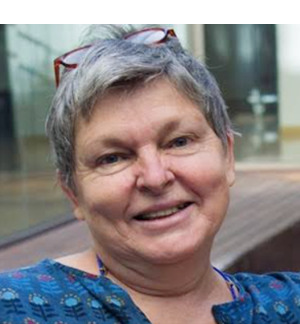
PhD (UMIST, UK) works at Universitat Autònoma de Barcelona (Spain) in the TransMedia Catalonia Lab. She has written and edited many books, over 100 academic papers and almost the same number of book chapters –all on Media Accessibility.
Leader and participant of numerous EU funded research projects focusing on media accessibility. She works in standardisation and participates in the UN ITU IRG-AVA – Intersector Rapporteur Group Audiovisual Media Accessibility. She has been working on Immersive Accessibility for the past 7 years first in a EU project calledImAc, which results are now further developed in TRACTION, MEDIAVERSE, MILE, and GREENSCENT.
She led until December 2022 the EU network LEADME on Media Accessibility. She was the Co-Chair of Study Group on Accessibility and Inclusion in the ITU Metaverse Focus Group, and she is leading the Digital Inclusion and Accessibility track of the ITU Virtual Worlds. She is now working on AI and accessibility in four EU funded projects ClearClimate, ALFIE, SPICE and VOPUS.
For more info please go to: https://webs.uab.cat/pilarorero/
This event is partly organised by