We are happy to share that our colleagues, Dr Maria Gaviña and Dr Lluïsa Schlesier, have taken part in the 25th Anniversary AEDEI International Conference. The conference, under the theme of “Victims,” took place at the University of the Basque Country in Vitoria-Gasteiz, from 27 to 27 May 2026.
Dr Gaviña and Dr Schlesier participated in the roundtable “Beyond Human Victims: Violence and its Memory in the Irish Landscape.”
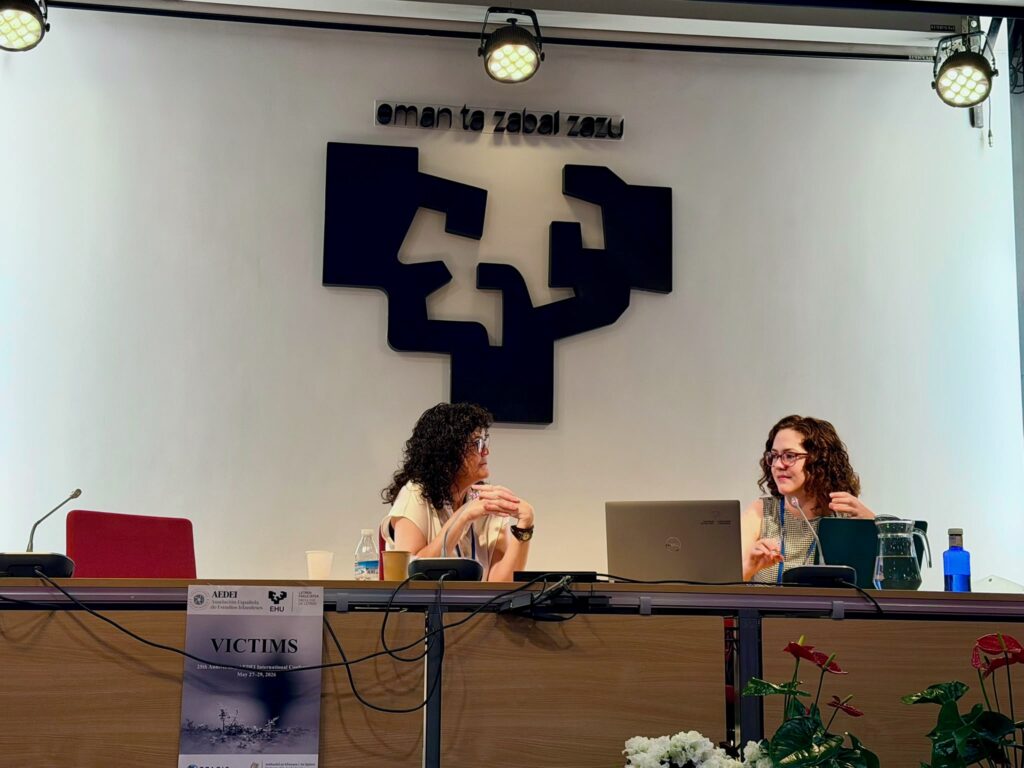
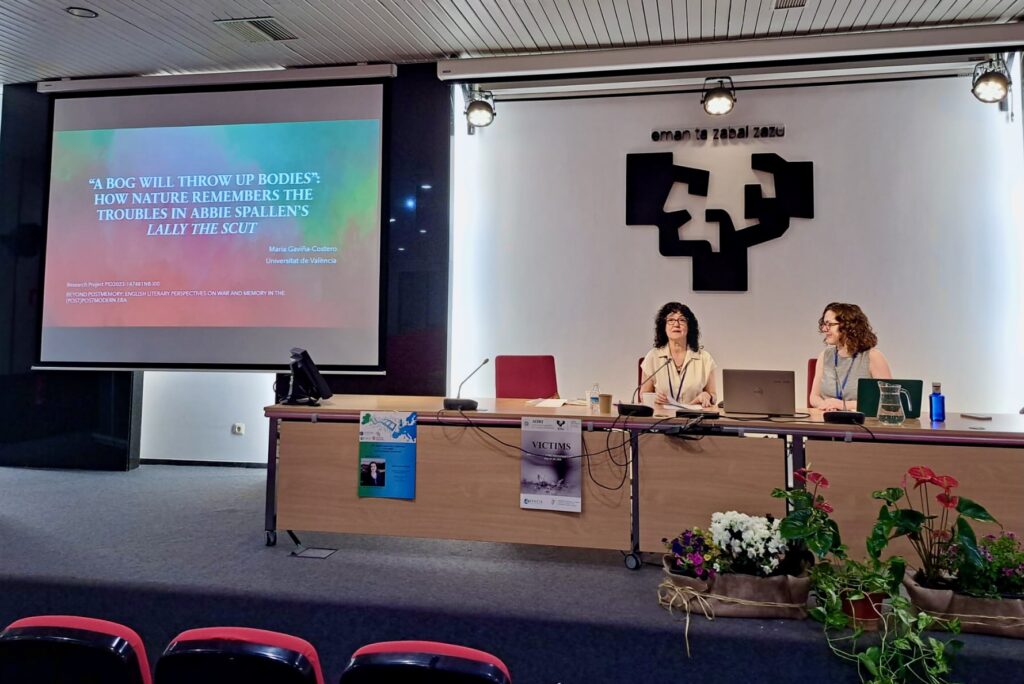
Dr Maria Gaviña delivered her paper, “A Bog Will Throw Up Bodies”: How Nature Remembers the Northern Irish Troubles in Abbie Spallen’sLally the Scut.” Dr Gaviña’s paper examines how Lally the Scut represents the Northern Irish Troubles through the landscape of the bog, where a child’s accident exposes the enduring presence of past violence. The play portrays the community as shaped by unresolved trauma, with the child symbolising a fragile post-Troubles society. Drawing on the concept of environmental postmemory, Dr Gaviña argues that the landscape itself retains and reveals the memory of conflict. Through dark humour, the play ultimately suggests that the Troubles persist beyond the peace process as an intergenerational and environmental form of trauma.
Dr Lluïsa Schlesier presented her paper “Landscape and Mind as an Archive of Absences: A Reading of Roddy Doyle’s The Last Roundup Trilogy from a Combined Perspective of Ecocriticism and Trauma Studies.” In this intervention, Dr Schlesier analysed Roddy Doyle’s The Last Roundup trilogy as a representation of the Irish revolutionary period through the lenses of ecocriticism and trauma studies. Focusing on Henry Smart, the narrative traces how experiences of violence during the Easter Rising (1916) and the War of Independence (1919-1921) produce a complex trauma that causes Henry’s premature loss of memory by fracturing his consciousness. This psychic dislocation is mirrored in the Irish landscape, where sites of violence, such as the disappeared house of Henry’s wife’s family, become symbolic absences. At the same time, the absence of impoverished citizens from official Anglo-Irish records, including Henry’s family, makes his fragmented psyche the sole repository of their existence. Dr Schlesier thus argues that the entanglement of personal and environmental histories shows how trauma extends beyond the individual and becomes inscribed in both memory and place.
