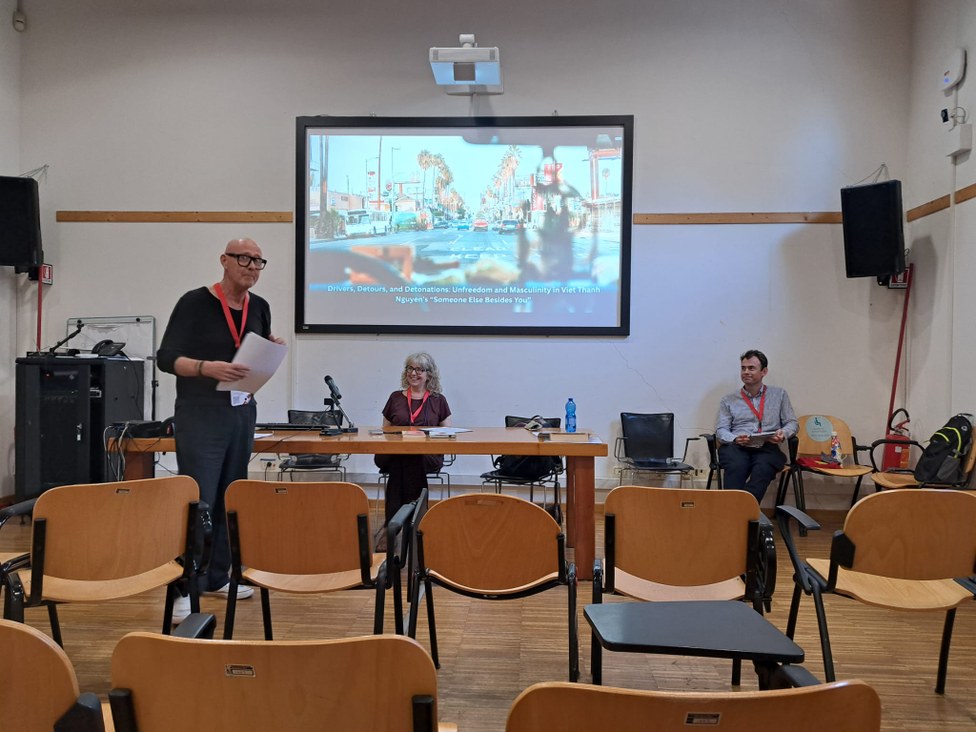
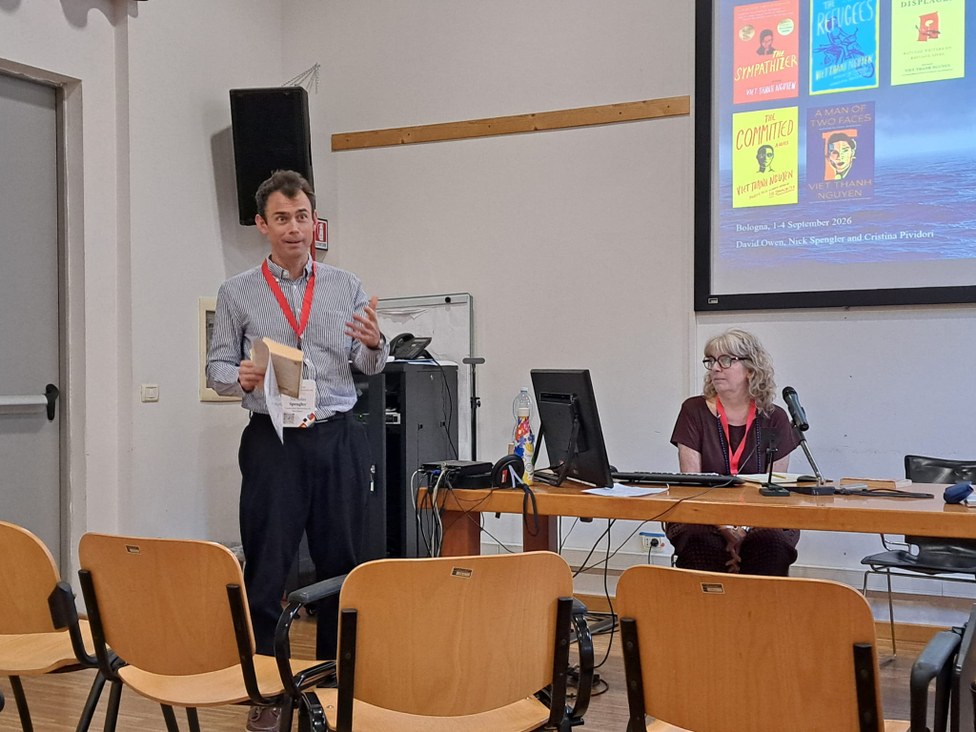
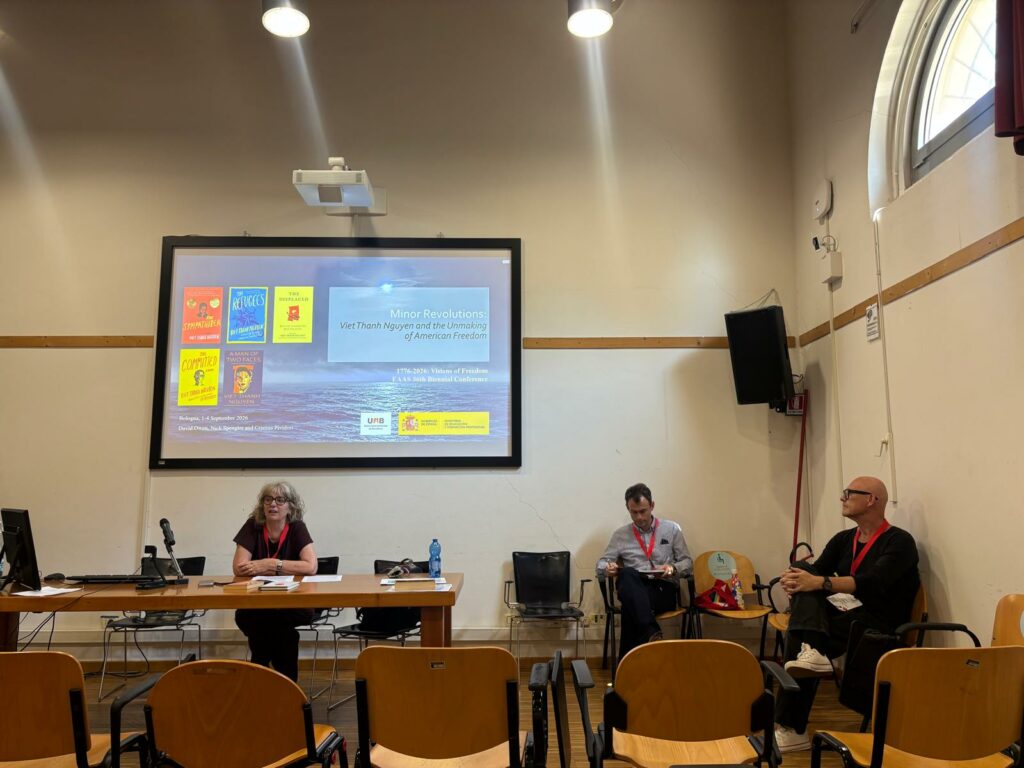
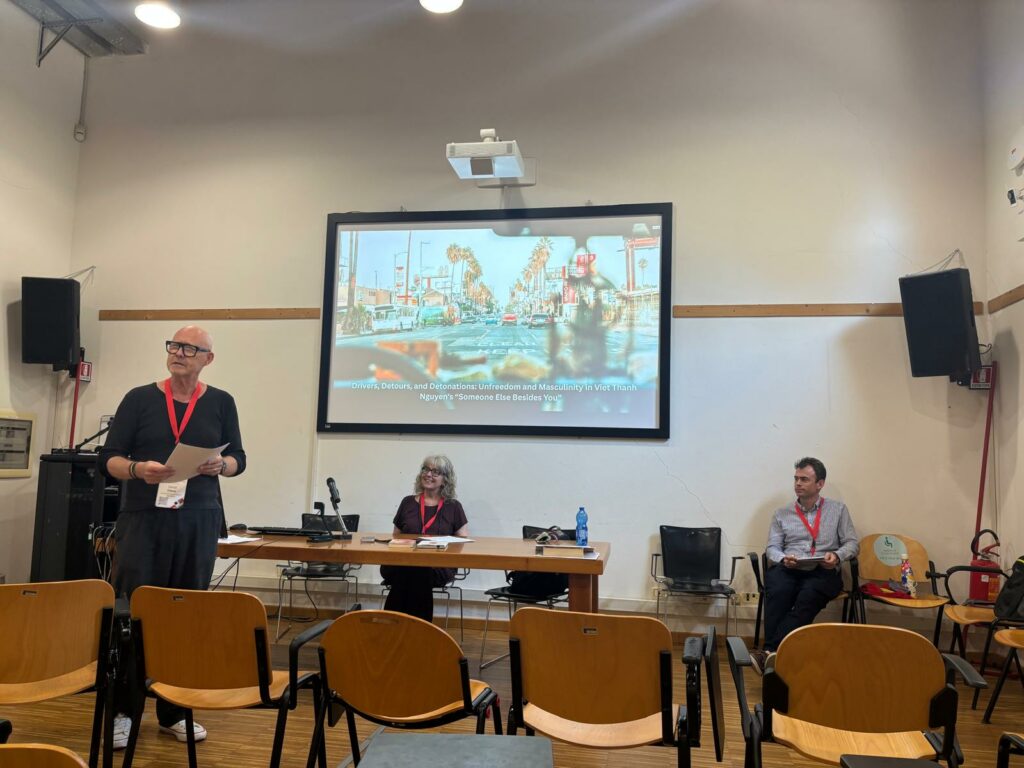
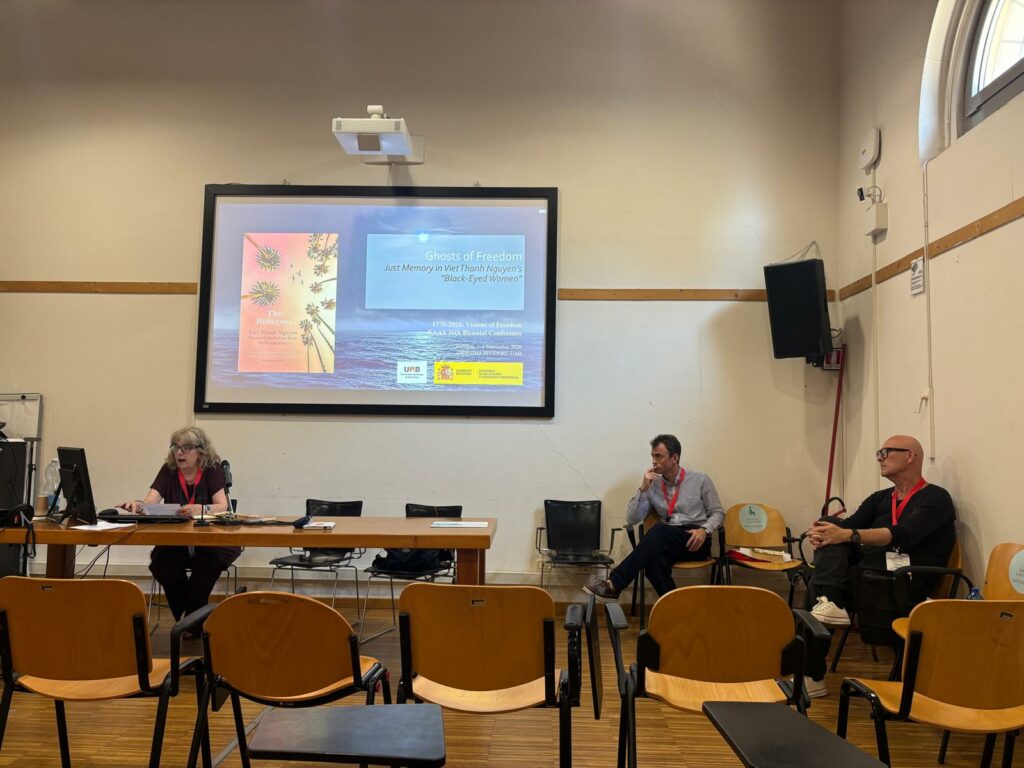
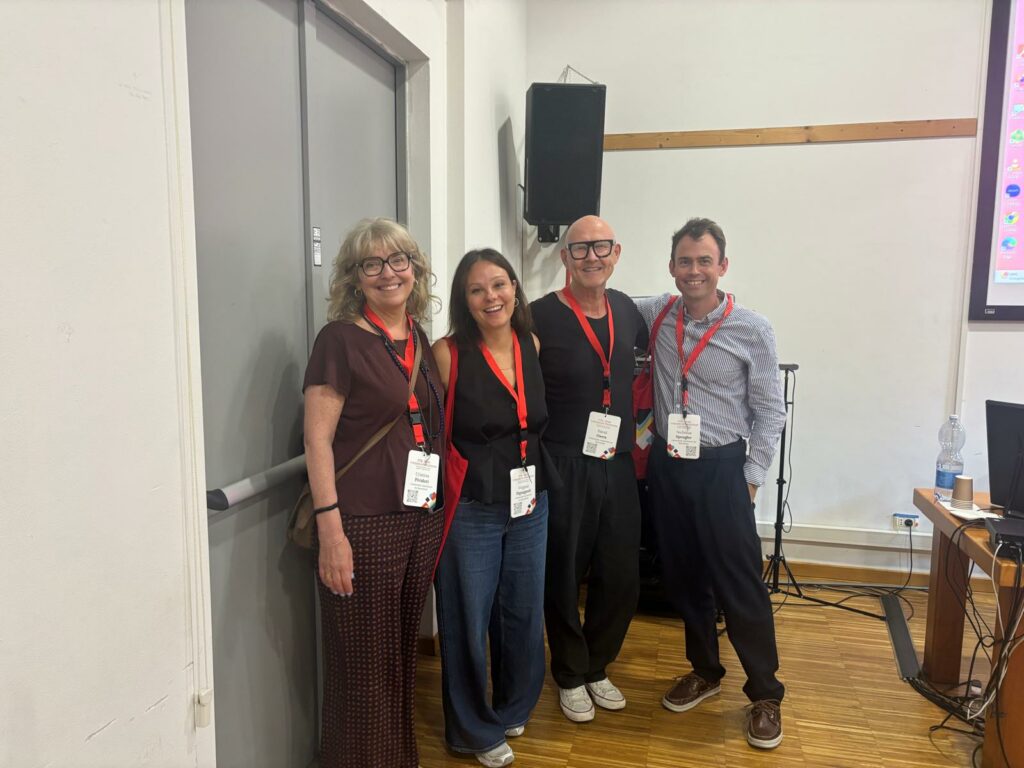
Members of the Beyond Postmemory research project took part in the 36th Biennial Conference of the European Association for American Studies (EAAS), “1776–2026: Visions of Freedom,” held at the University of Bologna from 1 to 4 September 2026.
Cristina Pividori, David Owen and Nicholas Spengler presented the roundtable “Minor Revolutions: Viet Thanh Nguyen and the Unmaking of American Freedom,” looking at how the Vietnamese American writer and scholar challenges dominant American narratives of freedom, in particular what critic Phuong Tran Nguyen calls the post-Vietnam “politics of rescue,” the demand that Vietnamese refugees repay their admission to the US with gratitude and uncritical silence.
Taking Nguyen’s recent Norton Lectures, published as To Save and to Destroy: On Writing as an Other (2024), as their starting point, the three papers read refugeehood as a standpoint from which the exclusions built into national narratives of liberty become visible. Nguyen’s notion of the “minor,” the vulnerable, marginalised or dismissed subject, gave the panel a shared way of thinking about the forms of freedom that can emerge from histories of displacement and violence.
Each paper took this in a different direction. David Owen’s “Drivers, Detours, and Detonations: Unfreedom and Masculinity in ‘Someone Else Besides You'” looked at patriarchal domination and its limited forms of resistance within the Vietnamese American family, reading responsibility and care as tentative alternatives to inherited models of masculine authority. Nicholas Spengler’s “Sympathy for ‘Nothing’: Doubleness and Freedom in Viet Thanh Nguyen’s The Sympathizer” focused on double consciousness in the novel and its unsettling reworking of “independence and freedom,” asking how sympathy might emerge from violence and dispossession. Cristina Pividori’s “Ghosts of Freedom: Just Memory in Viet Thanh Nguyen’s ‘Black-Eyed Women'” read haunting as an ethical form of remembrance, tracing the narrator’s movement from repression and the expectation of refugee gratitude towards what Nguyen calls “just memory.”
The roundtable also raised a further question the group wants to keep pursuing: how refugee narratives might challenge models of transmission built mainly around generational memory, and open up other ways of thinking about displacement and freedom.