LAPREC contributed to the LASA 2026 International Congress, held in Paris at the end of May, with a critical debate that examined the effects of polarization, media narratives on migration and otherness, and forms of digital activism that respond to contemporary inequalities.

The panel “Public Discourse, Communication and Social Media: Dialogues on Discrimination and Difference,” moderated by Teresa Velázquez García-Talavera, brought together contributions focused on contemporary dynamics of polarization, otherness, and inequality. Both Velázquez’s presentation, “Fallacies and Disqualification: The Disappearance of the Argument,” and Lucía Nieto’s presentation, “From the Headline to the Comment: The Public Construction of Difference on Social Media,” incorporated data from the research project “Digital Media and Social Networks: Discourses on Moroccan Female Migration in the Mediterranean: The Construction of Imaginaries, Uses, and Reception,” led by Núria Simelio Solà and Ricardo Carniel Bugs, of which both speakers are members.
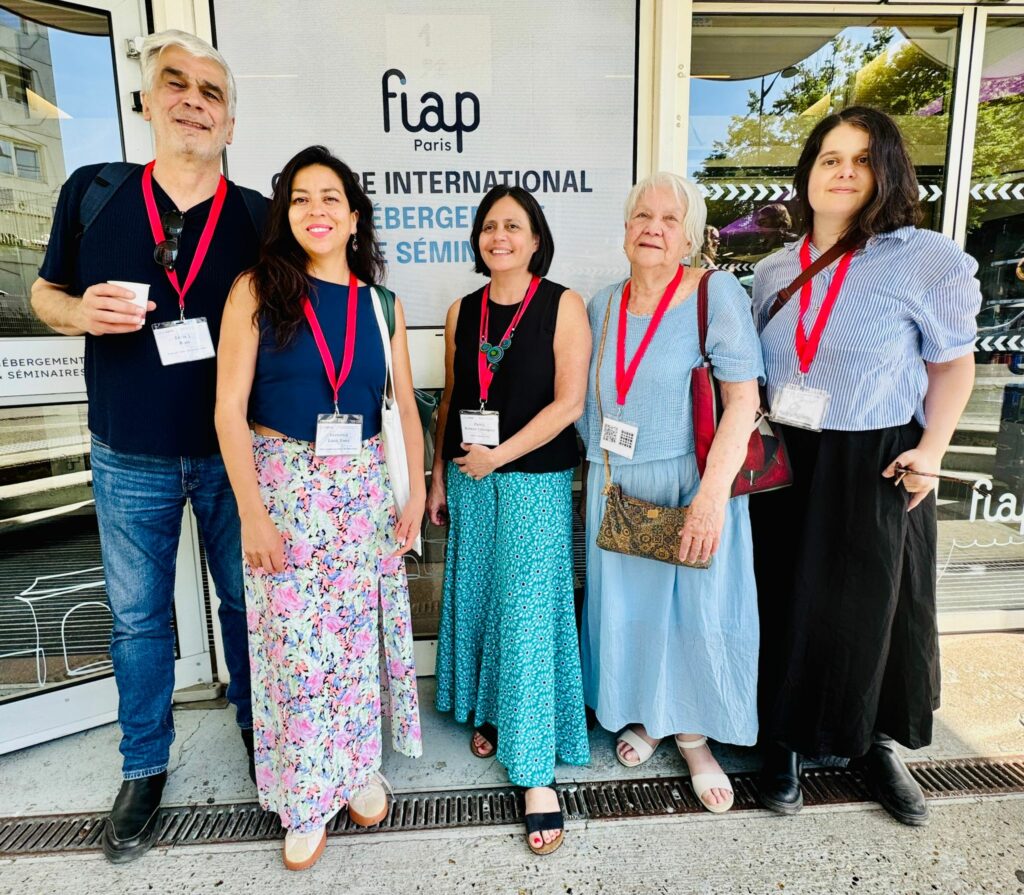
On the other hand, Verónica Luna Báez, a member of LAPREC, presented “The Representation of ‘the Other’ as an Enemy: Media Narratives, Social Mobilization, and the Indigenous Movement in Ecuador,” contributing to the discussion from a Latin American perspective.
The panel also featured Félix J. Ríos, Professor at the University of La Laguna and Coordinator of the Applied Semiotic Studies Research Group (GIESA), who presented “Literary Creation and Networked Writing: Diverging Paths. Discursive Polarization and Republican Response”; and Patria Román-Velázquez, Professor at King’s College London and Director of the Latin Elephant project, who delivered the presentation “Latinx Urbanisms and Digital Activism to Resist Gentrification Processes in London.”