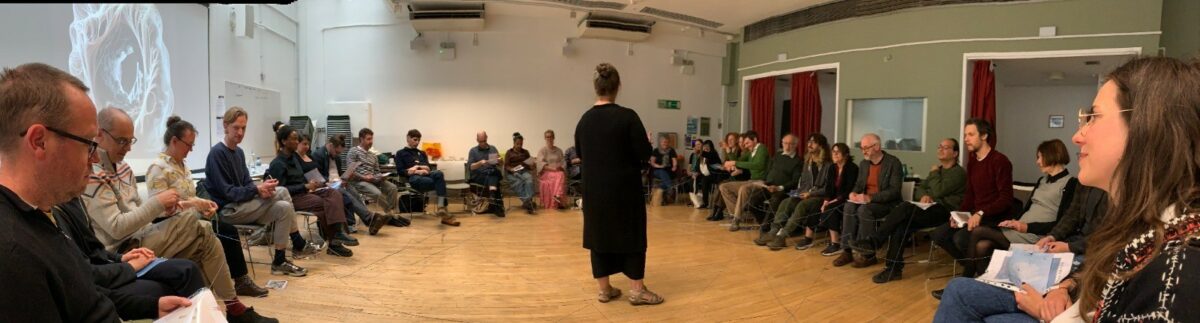
In April 2025, we prepared together with Hansun Hsiung (Durham University) an experimental workshop on sensory reconstruction in the history of science, and the role of the senses in the generation of knowledge. We presented it at UCL, in a seminar on methodological experimental workshops in the history of science.
Experiment title: Hearing Voices: Psycho-sensorial Reconstructions of Past Experiences.
Statement of aim of the experiment: Historians have demonstrated how the reconstruction of
experiments serves to retrieve tacit knowledge (e.g., gestures, skills). But rather than seeking the
“certainty” of knowledge, here we intend to reconstruct something that for the scientific record is typically discarded, uncertain, and unknown: the sensorial, affective, and
embodied experiences of experiments. We are already aware that experience is historically situated
and experienced in different contingent ways by participants. However, we contend that the problem
of the communication of experience is something that troubles the core of historical research and the
limits of epistemology. To examine the communication of experience, we require new methods—new
modes of scholarly communication—that reflexively problematize “communication.” We argue that
Spiritualism and its associated practices—a realm where psycho-physiological experiences of
extraordinary sensory stimuli were in play—are a key repository for inspiration.
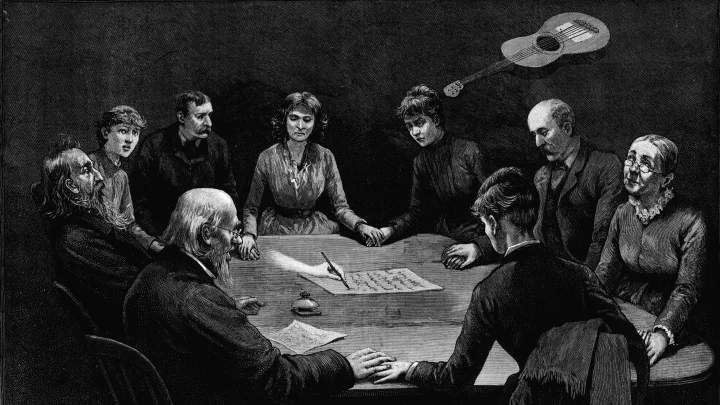
In the experiment, we created two experimental groups with the participants. Both groups were presented, without any historical context, with different records from the past, referring to the same event: a paranormal manifestation (the Enfield case, which occurred on the outskirts of London). By not providing historical context (which historians normally use to give meaning to the events we study), we intended for the participants to have to construct the meaning of what happened solely through the sensory experience they had access to. One of the groups had to read a written transcript of all the sounds that could be heard in the house during the paranormal events (knocks, furniture moving, voices of possession…). The other group accessed the same information, but instead of reading the transcript, they listened through headphones (with their eyes covered) to the sounds of the event itself (we used real recordings edited to give them a binaural effect). After reading/listening, both groups had to answer a series of questions, and then compare their experiences and the knowledge they had gained through them.
Through this, we were able to explore the role of the senses and emotions in the production of knowledge. Furthermore, we raised the need to innovate in new ways of communicating the history of science that go beyond the written text, and incorporate these sensory and emotional components, in order to enrich and make more complete our idea of the past.


