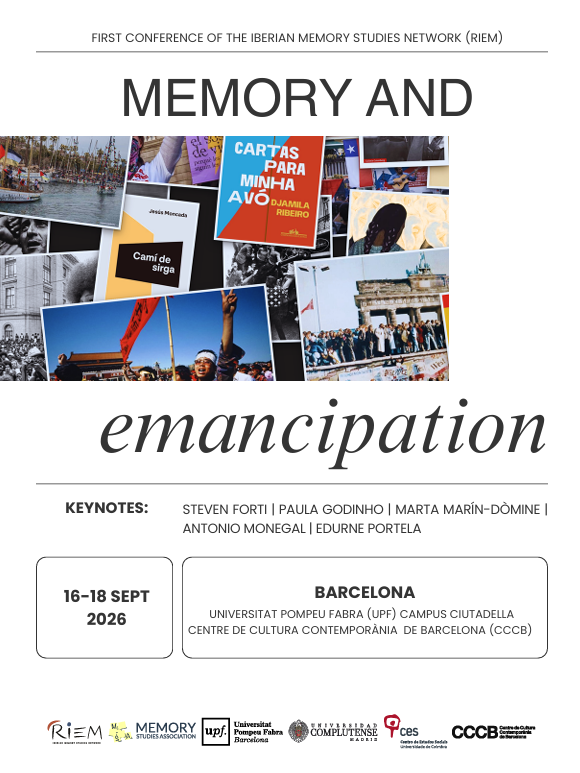
We are happy to share that Elvira Aguilera attended and presented at the first conference of the Iberian Memory Studies Network (RIEM), held from 16 to 18 September 2026 at Universitat Pompeu Fabra, Barcelona. The inaugural conference, under the theme of “Memory and Emancipation,” explored the tensions and dialogues between memory and emancipation as means to rethink our past, present, and future.
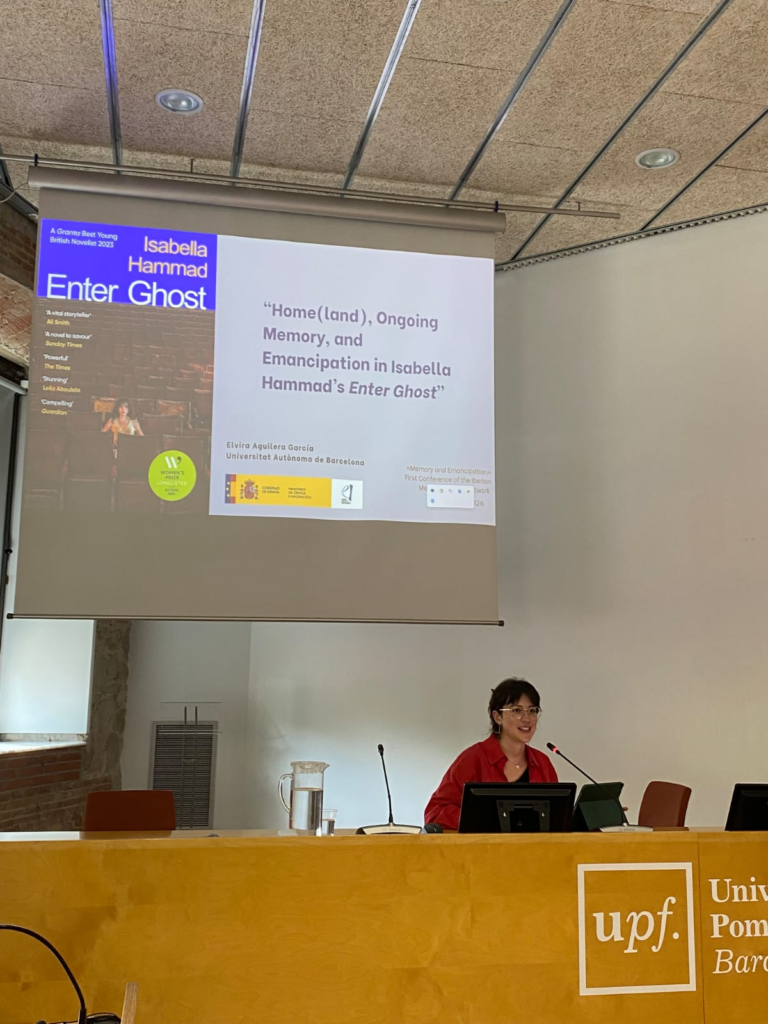
Aguilera presented the paper entitled “Home(land), Ongoing Memory, and Emancipation in Isabella Hammad’s Enter Ghost.” In her intervention, Elvira Aguilera argued that memory processes represented in contemporary Palestinian diasporic Anglophone fiction by second- and later-generation authors illustrate imaginative representations of memory dynamics characterised by an interdependence with the material world that appears in such narratives. Focusing on Isabella Hammad’s Enter Ghost, Aguilera suggests that, in the novel, material spaces of home and homeland do not merely preserve Palestinian memory but actively mediate ongoing and cumulative forms of remembrance, enabling a mode of emancipation grounded in historical and spatial belonging.
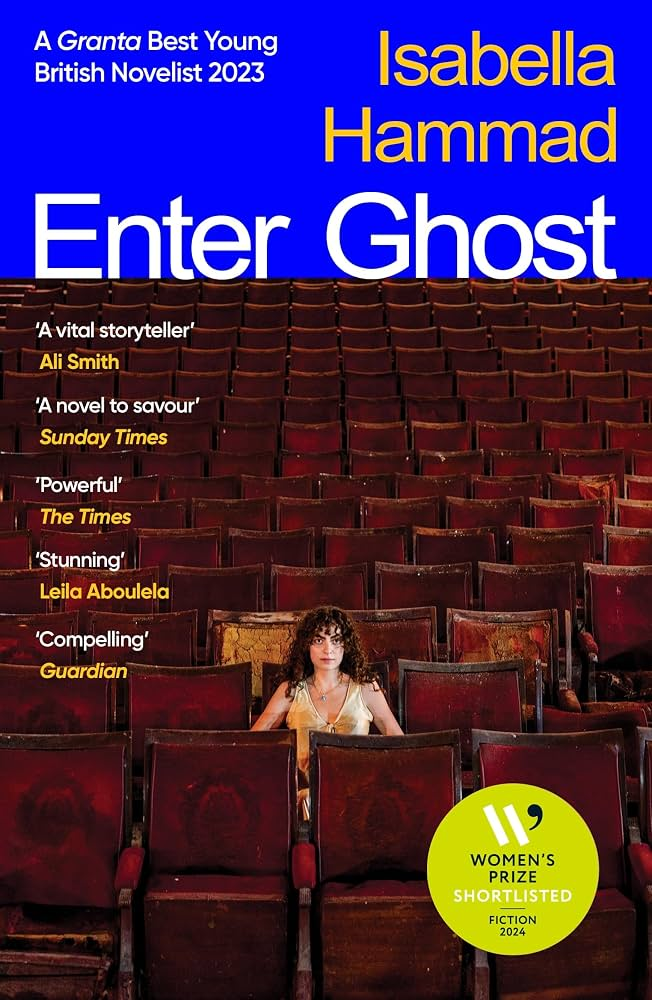
The centrality that matter has in the context of settler colonialism becomes clear when one recognises the cyclical and constant practices of erasure and dispossession that have taken place across the territory of Palestine since the Nakba in 1948 and continue into the present day, exemplified, for instance, through the destruction of habitational space (Siegfried, 2020). The effects of these cyclical practices on Palestinian community memory work have been theorised as ‘ongoing memory’ (Saloul, 2009, 2012) and ‘cumulative memory’ (Jayyusi, 2007), which, unlike concepts such as ‘postmemory’ (Hirsch, 2012) or ‘prosthetic memory’ (Landsberg, 2000), emphasise not only connection to a situated past but the continuity of events as processes unfolding in the present.
In her intervention, Elvira Aguilera examined, through a close reading of Enter Ghost informed by memory studies and materialist criticism, how domestic, urban, and territorial materialities shape the protagonist’s negotiation of memory, return, and belonging within the context of diaspora and ongoing settler-colonial violence. The material world of the narrative and the memory processes it triggers become a mode of emancipation within the context of colonial matrices, enabling the protagonist of the novel to recognise herself not as a stranger to a relatively distant history, but as part of an ongoing history that remains alive in the family’s and community’s imaginaries as well as in the material world of the present, one that resists historical, cultural and ethnic erasure.