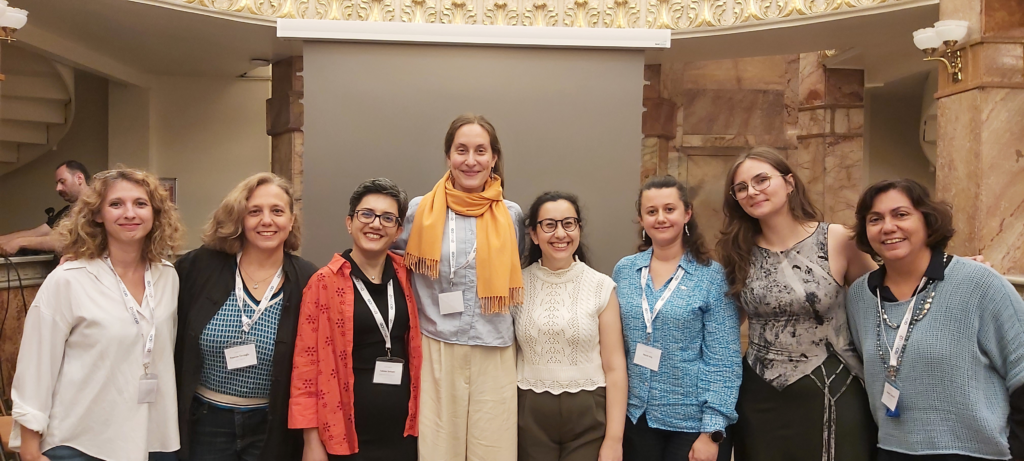
We are happy to share that our PhD student and research assistant, Cristina Franco, took part in the conference COVID Legacies: Long-Term Social and Cultural Legacies, which took place from 9 to 11 October in Istanbul and was organised by Sabancı and Koç Universities. Bringing together scholars from a wide range of disciplines, from medicine to literary studies, the conference fostered an interdisciplinary examination of the COVID-19 pandemic. Discussions focused on the unequal distribution of vulnerability, the ways in which the crisis intensified existing structural inequalities, and the enduring social and cultural consequences of the pandemic.
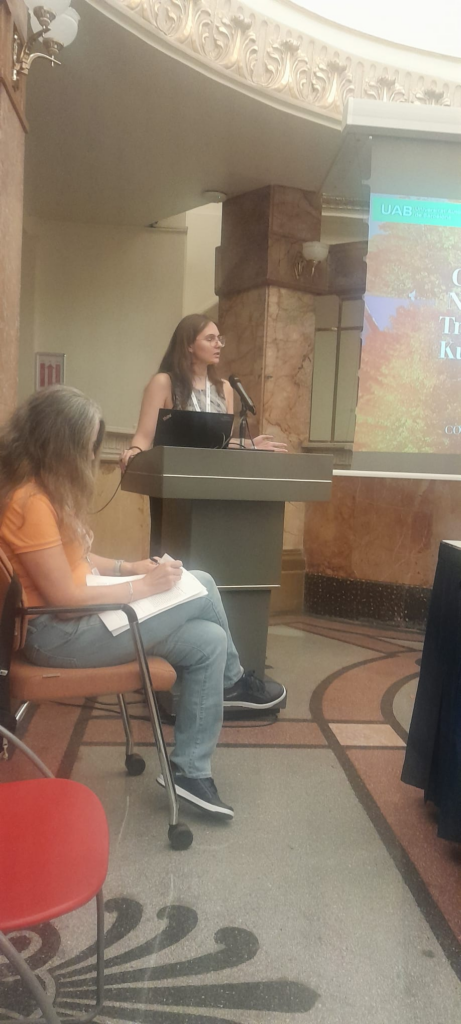
Cristina Franco delivered her paper “COVID-19 Fiction and the Necropolitics of Infection: Triage and Conflict in Hari Kunzru’s Blue Ruin (2024)”. The paper explores the literary afterlives of the coronavirus pandemic, arguing that Blue Ruin challenges the master narrative of war that surrounded the COVID-19 crisis. Drawing on biopolitics and Hanna Meretoja’s narrative hermeneutics, Cristina Franco suggests that Kunzru’s novel articulates a counter-narrative to the dominant implicit narrative of war by relocating pandemic conflict from heroic struggle to socially situated forms of precarity and inequality.
The novel hence exposes the pervasive logic of triage that structures the unequal distribution of protection, exposure, and recognition across its characters. Through formal strategies like juxtaposition, parody, metaphor, and focalisation, Blue Ruin makes this differential distribution narratively visible. Read through Meretoja’s three dimensions of narrative agency, the novel exposes the war script as a culturally constructed model of sense-making, dramatises the limitations it places on the capacity to imagine alternative responses to vulnerability, and stages both the possibilities and failures of dialogical encounters between differently positioned subjects. In this way, Blue Ruin does more than reject the metaphor of war: it shifts the meaning of pandemic conflict towards struggles over who can withdraw from risk, whose vulnerability demands care, and whose experience becomes narratively and publicly recognisable.
The presentation was followed by an engaging Q&A session, which reflected on literary representations of the coronavirus pandemic and raised key questions regarding the narratological features of pandemic narratives, how war metaphors are employed in these fictions, and how the pandemic is remembered today.