Keynote speech – Monday 25th January
The Sinographic Method
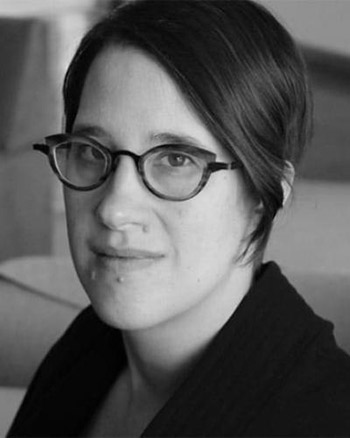
By Andrea Bachner, Cornell University.
Summary: Chinese writing has been an object of fascination and criticism for centuries, both within and beyond the Sinophone world: an example of perfect writing or an embodiment of the primitive; an obstacle to modernisation and technological media or an expression of the digital revolution; a remnant of a feudal past or a promise of an emerging poetic and artistic sensibility.
Reflections on Chinese writing and experiments with sinographic materials are therefore abundant, and they also offer us opportunities to explore key questions of our time and academic methodologies. Through several examples, this talk will develop a “sinographic method”: the sinograph is not merely an object of study or a tool for expression and communication, but can also become a method for sharpening our cultural analyses and critiques beyond the limits of Eurocentric thought grounded in the alphabetic imaginary, provided that we avoid orientalist or Sinocentric tendencies.
Bionote: Andrea Bachner is a Professor of Comparative Literature at Cornell University. Her research explores intersections and comparisons between Sinophone, Latin American, and European cultures. She has published two books: Beyond Sinology: Chinese Writing and the Scripts of Culture (Columbia University Press, 2014) and The Mark of Theory: Inscriptive Figures, Poststructuralist Prehistories (Fordham University Press, 2017). She is currently completing a book that rethinks models of comparison through the rich history of cultural contact, exchange, and affinity between Latin American and Chinese cultures (The Comparative Imagination). She is also working on an exploration of membrane metaphors in contemporary critical theory.
Keynote speech – Wednesday 27th January
The Imjin War and the Beginnings of the Early Modern in East Asia
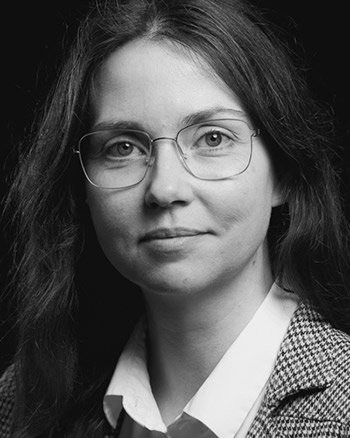
By Rebekah Clements, Icrea Research Professor, Universitat Autònoma de Barcelona.
Summary: The Imjin War – Toyotomi Hideyoshi’s invasions of Korea – was one of the largest conflicts of the sixteenth century world, entangling Korea, Japan, and China between 1592 and 1598.
Based on the results of the 6-year, European Research Council project “Aftermath of the East Asian War of 1592-1598”, this presentation will explore some of the technological, environmental, and administrative implications of the conflict in the seventeenth century and beyond. Heretofore, studies have mainly looked at diplomatic, political, and literary impacts, but this research raises world historical comparative questions about the nature of “early modernity” and advances debates on war legacy in the East Asian context.
I will compare the Imjin War with contemporaneous conflicts before moving on to a discussion of current scholarship in Japanese, Chinese, Korean, and European languages. Despite the scale and significance of the Imjin War, there is relatively little Western scholarship available, and Korean- and Japanese-language scholarship, though voluminous, has usually limited itself to single-country concerns. The war is known by various names, which change according to region and scholarly specialization, reflecting the fractured approach to the study of the war thus far. By considering nomenclature and national historiographies, we can consider the war as a world historical event. Therefore, I will address the use of the term “early modern” to describe sixteenth-to-nineteenth-century East Asia, taking the Imjin War as the beginning of a conjunction from the end of the sixteenth to the end of the seventeenth century, out of which emerges an “early modern” period for all of East Asia. Although the use of the term “early modern” in relation to East Asia is contentious due to its associations with Eurocentric “teleological” and “typological” approaches to global historic stages, I use it in a heuristic sense to suggest a historical period with global contemporaneous aspects (e.g., the “gunpowder age”) and to draw attention to continuities and discontinuities within East Asian histories.
Bionote: Rebekah Clements is an ICREA Research Professor at the Department of Translation, Interpreting and East Asian Studies, Autonomous University of Barcelona. She completed degrees in law and Asian studies at the Australian National University, before obtaining a masters in classical Japanese literature from Waseda University in 2008. She completed her PhD in East Asian History from the University of Cambridge (Trinity College) in 2012. Following her PhD, she was a Leverhulme-funded research associate at the Faculty of Asian and Middle Eastern Studies, University of Cambridge, and held a junior research fellowship at Queens’ College, Cambridge from 2012-2015. From 2015-2018 she held a lectureship and then an associate professorship (senior lectureship) at Durham University. She joined ICREA and the UAB in October 2018.
Rebekah is an expert in the cultural history of 16th-19th century Japan. She combines textual and material-culture sources to shape new understandings of Japanese early modernity, from developments in the commercial publishing industry to the iconography of warrior power that legitimized regimes across the “medieval”-“early modern” divide. She was previously the Principal Investigator of the award-winning European Research Council Starting Grant, “The Aftermath of the East Asian War of 1592-1598” (2018-2024), which examined the environmental, technological, and social legacy of the largest military conflict of the 16th-century world. Her current project, “Consuming Nature“, supported by an ERC Consolidator Grant (2026-2031), argues that a new mode of engaging with the natural world evolved among non-elites in 17th-19th century Japan as the enjoyment of nature became a commodified leisure activity with consequences for our understanding of early modernity in Japan and beyond.