 | Our Group integrates a series of lines of research, interrelated and developed in the context of High Performance Computing (HPC) |
Research Lines
The HPC4EAS research group focuses on High-Performance Computing (HPC), efficient and secure computing, heuristic methods, and high-performance simulation, with particular attention to Artificial Intelligence applications and intelligent healthcare systems.
Our research is organized into three main areas:
1. Efficient and Secure Execution in HPC
Research on methodologies, models, and tools to improve the efficient and secure execution of applications on HPC and Cloud Computing infrastructures, with particular emphasis on Artificial Intelligence workloads.
- Performance Modeling of AI Applications in HPC and Cloud Computing
- Performance analysis and modeling of AI applications.
- Performance prediction and scalability.
- Efficient mapping of applications onto computing resources.
- Computational and energy efficiency.
- Efficient HPC I/O Management for AI Applications
- Characterization and analysis of I/O behavior in AI workloads.
- Efficient management of data access and movement.
- Performance and scalability of HPC storage and I/O systems.
- Strategies for improving the execution efficiency of data-intensive AI applications.
- Fault Tolerance and Security in HPC Systems
- Fault-tolerance mechanisms for HPC environments.
- Integration of fault tolerance and security.
- Software vulnerability analysis and attack detection.
- Resilience and secure execution of HPC applications.
2. Heuristic Algorithms for Complex Problems
Research on computationally efficient heuristic and metaheuristic methods for finding optimal, near-optimal, or high-quality solutions to complex problems.
- Metaheuristic Search in Multidimensional Spaces
- Design and evaluation of metaheuristic search algorithms.
- Exploration of large and complex solution spaces.
- Computationally efficient search strategies.
- Application of Heuristic Methods
- Resource allocation and configuration in HPC systems.
- Intelligent management and decision-support problems.
- Application of heuristic approaches across the group’s HPC and healthcare research activities.
3. Simulation and Management of Intelligent Healthcare Systems
Research on modeling, simulation, and intelligent decision-support systems for healthcare applications, combining HPC, Artificial Intelligence, and Agent-Based Modeling (ABM).
Evaluation of mobility scenarios affecting emergency services.
Emergency Department Simulation
-Modeling and simulation of hospital Emergency Departments.
-Development of configurable and on-demand simulators.
-Simulation-based decision support.
Automatic and Intelligent Emergency Department Management – AIMED
-Intelligent management of healthcare resources.
-Decision-support systems for Emergency Departments.
-Digital Twin approaches to anticipate system behavior and critical situations.
Resilience of Emergency Departments
-Analysis of healthcare services under disruptive and extreme situations.
-Strategies to maintain service performance under overload conditions.
-Simulation of accidents, catastrophes, pandemics, and other critical scenarios.
High-Performance Agent-Based Simulation for Chronic Diseases
-High-performance Agent-Based Modeling and Simulation.
-Modeling the progression of chronic diseases.
-Support for healthcare decision-making, with particular attention to Chronic Kidney Disease.
Agent-Based Simulation of Urban Mobility and Emergency Traffic
-Modeling urban mobility using Agent-Based Simulation.
-Analysis of high-priority emergency traffic.
News
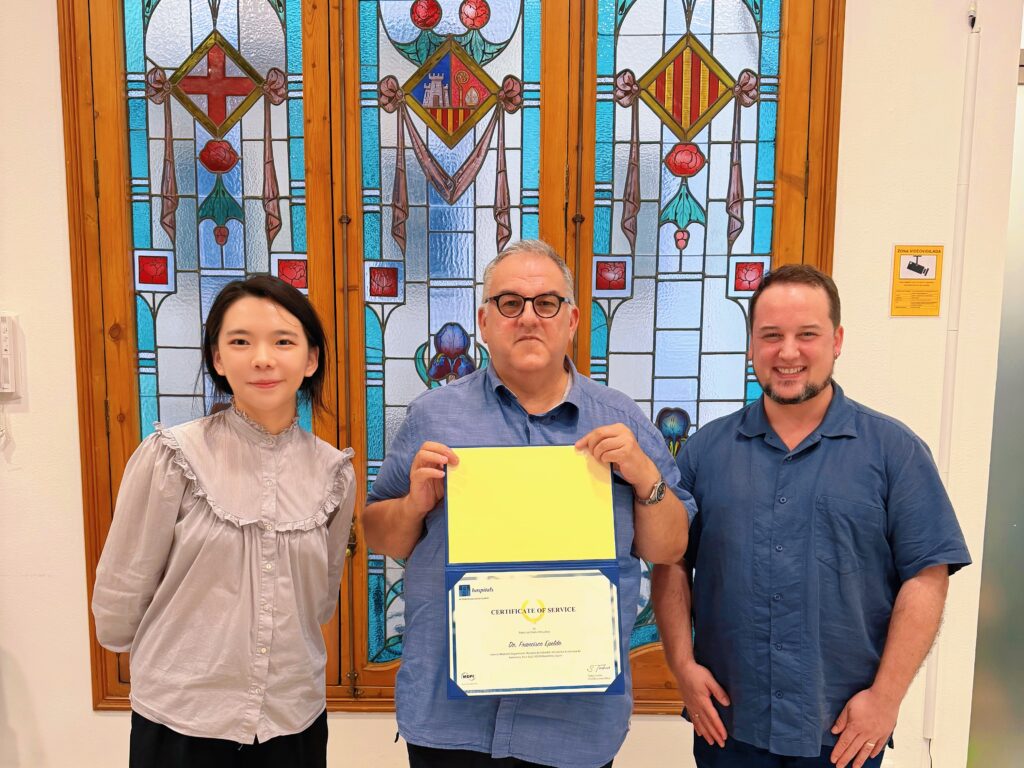
Francisco Epelde Renewed as Editor-in-Chief of Hospitals (MDPI)
We are pleased to announce the renewal of Francisco Epelde as Editor-in-Chief of Hospitals, a scientific journal published by MDPI.
This renewal recognizes his continued commitment to scientific research, academic excellence, and the dissemination of knowledge in the healthcare field.
Congratulations to Francisco Epelde on this recognition!
New CORA Dataset on Parallel I/O in Distributed Deep Learning
Edixon Parraga and collaborators have made a new research dataset openly available through CORA – Research Data Repository.
Replication Data for: Parallel I/O Analysis in Distributed Deep Learning Applications on High-Performance Computing
The dataset contains experimental data from the study of parallel I/O in distributed Deep Learning workloads on HPC systems. Its publication provides the scientific community with access to the data behind the research, supporting further analysis, comparison, and reproducibility of the results.
Access the dataset:
DOI: 10.34810/DATA3618
News Blog
-
JCC2024
2024-11-03 08:42 -
ICCS 2024
2024-07-28 08:02 -
PDPTA 2024
2024-07-25 06:28