MolBioMed · Universitat Autònoma de Barcelona
Computational modelling for inflammation research
Photochemistry, protein design, drug design and allosteric effects, studied with computational chemistry.

What do we do in our group?
01
Photochemistry
Photoswitches have enormous potential as drugs: with quantum chemistry we try to understand how they work and how to improve them
02
Protein Design
Enzyme engineering is one of the most powerful tools for synthesising specific compounds
03
Drug Design
We are redesigning drugs to inhibit inflammation
04
Allosteric Effects
Sometimes enzyme activity depends on the motion of several domains of the protein structure; to understand how they work, these motions have to be studied
Latest publications
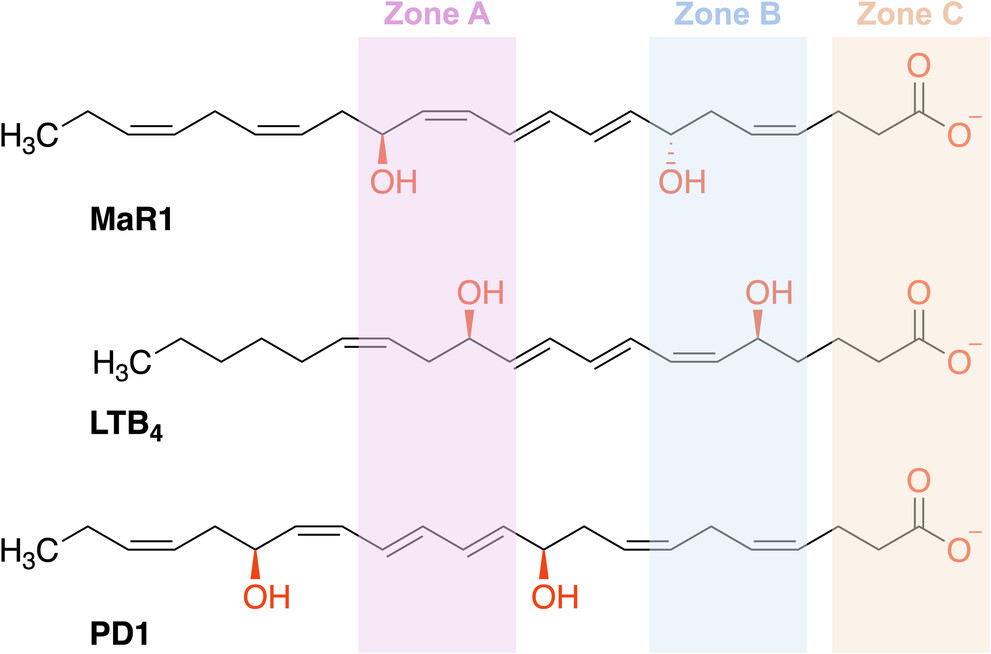

Omega-3 DHA as a blank canvas: A molecular approximation to how lipid mediators modulate LGR6 in inflammation resolution
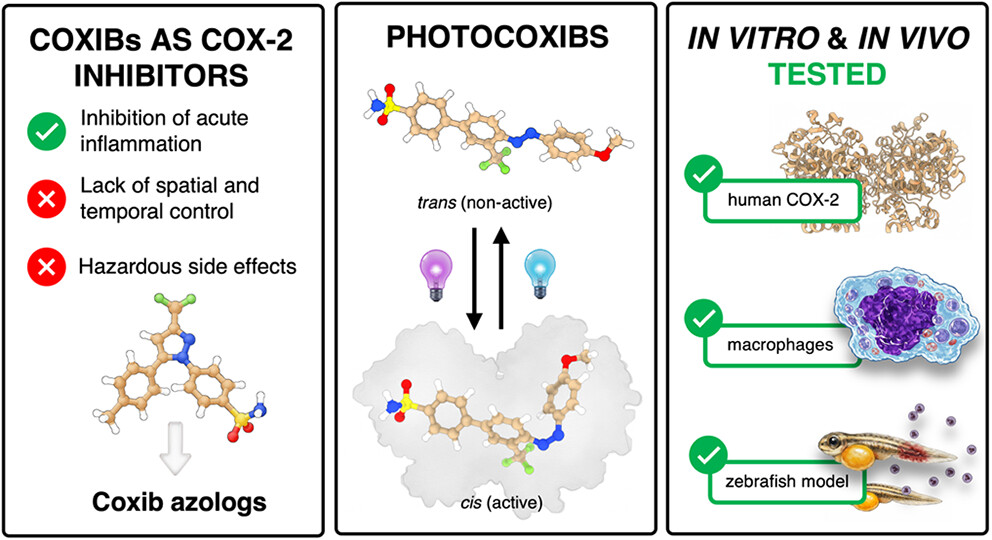
Photoswitchable COX-2-Selective Inhibitors as Light-Regulated Anti-Inflammatory Agents
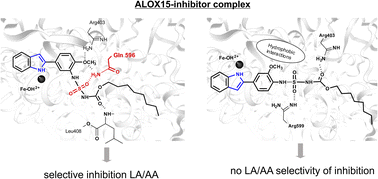

Exploring allosteric properties of mammalian ALOX15: octyl (N-(4-(benzofuran-2-yl)-2-methoxyphenyl)sulfamoyl)- and octyl (N-(4-(1H-indol-2-yl)-2-methoxyphenyl)sulfamoyl)carbamates as ALOX inhibitors
Latest news
17 July 2026
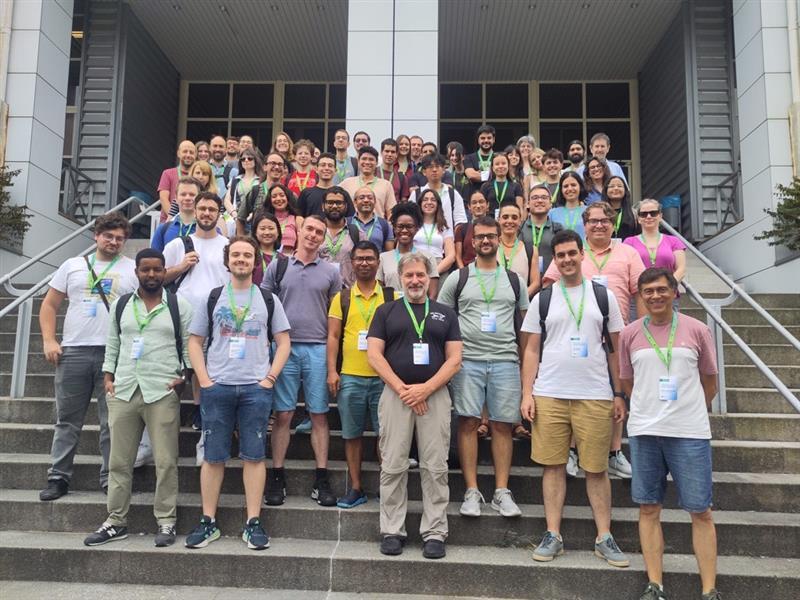
Pedro attends AMBER2026
This week Pedro is attending the Amber Machine Learning and Free Energy Simulation Workshop in Donostia, organised by DIPC and the York Lab (Rutgers University).

2 July 2026
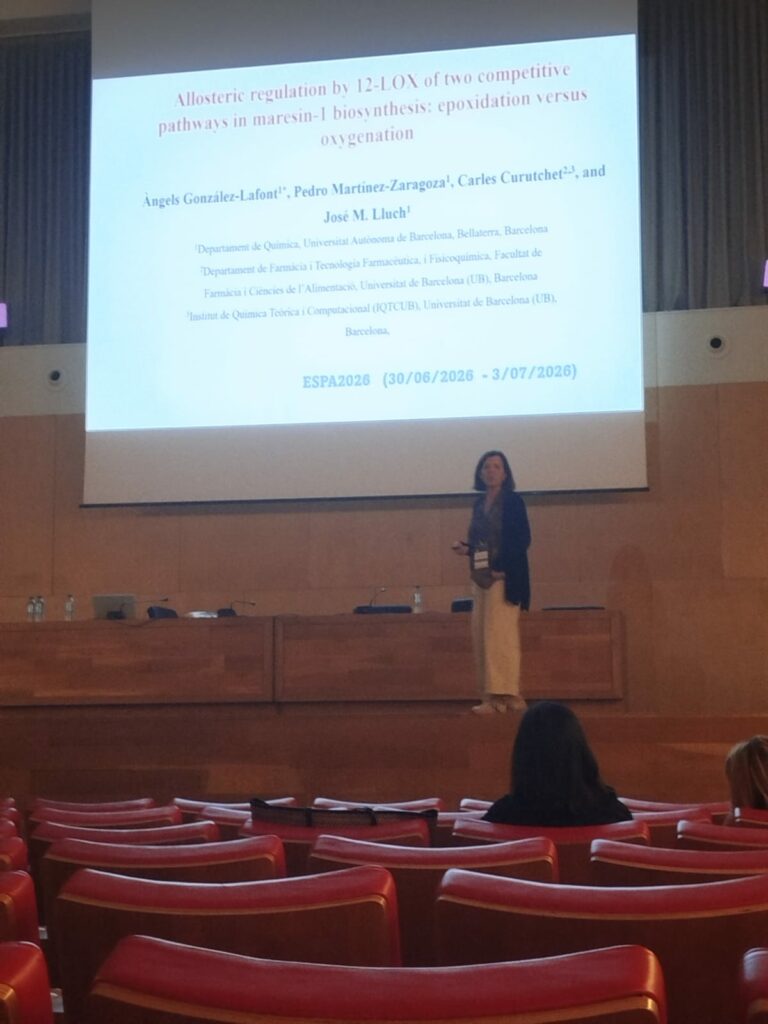
Àngels, invited speaker at ESPA2026
In her talk she presented the work: “Allosteric regulation by 12-LOX of two competitive pathways in maresin-1 biosynthesis: epoxidation versus oxygenation”
1 July 2026
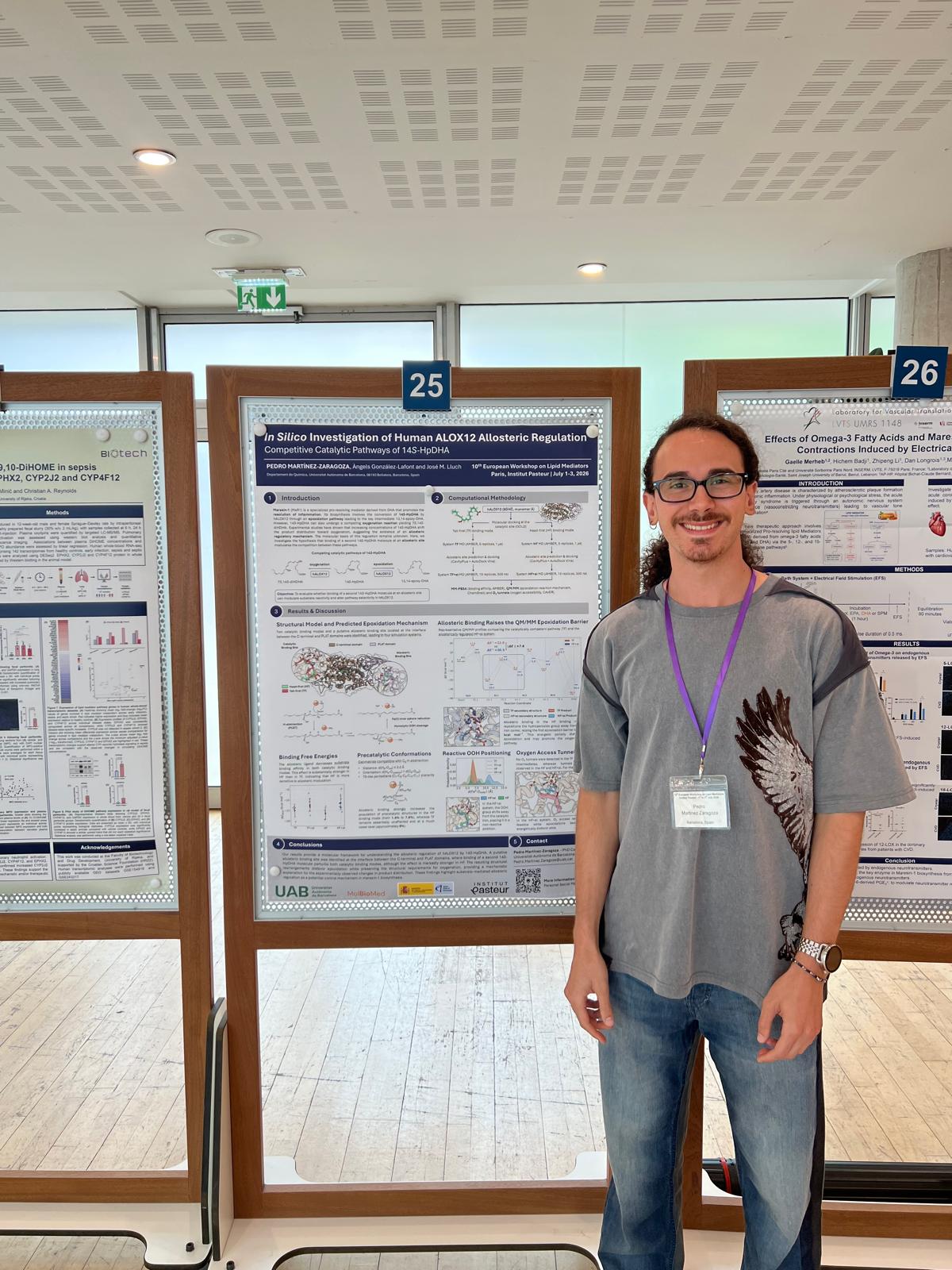
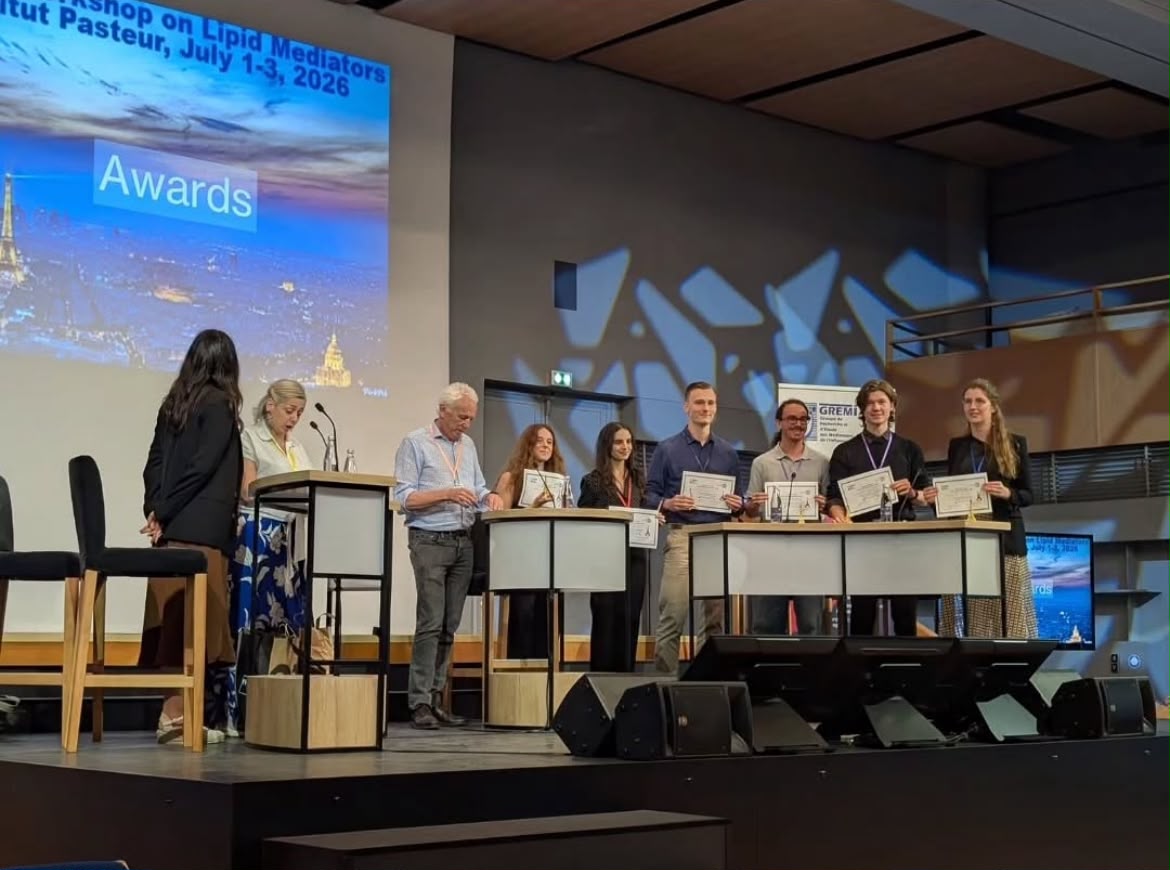
Pedro attends 10EWLM
His work “In Silico Investigation of Human ALOX12 Allosteric Regulation: Competitive Catalytic Pathways of 14S-HpDHA” wins the best poster award.